Image
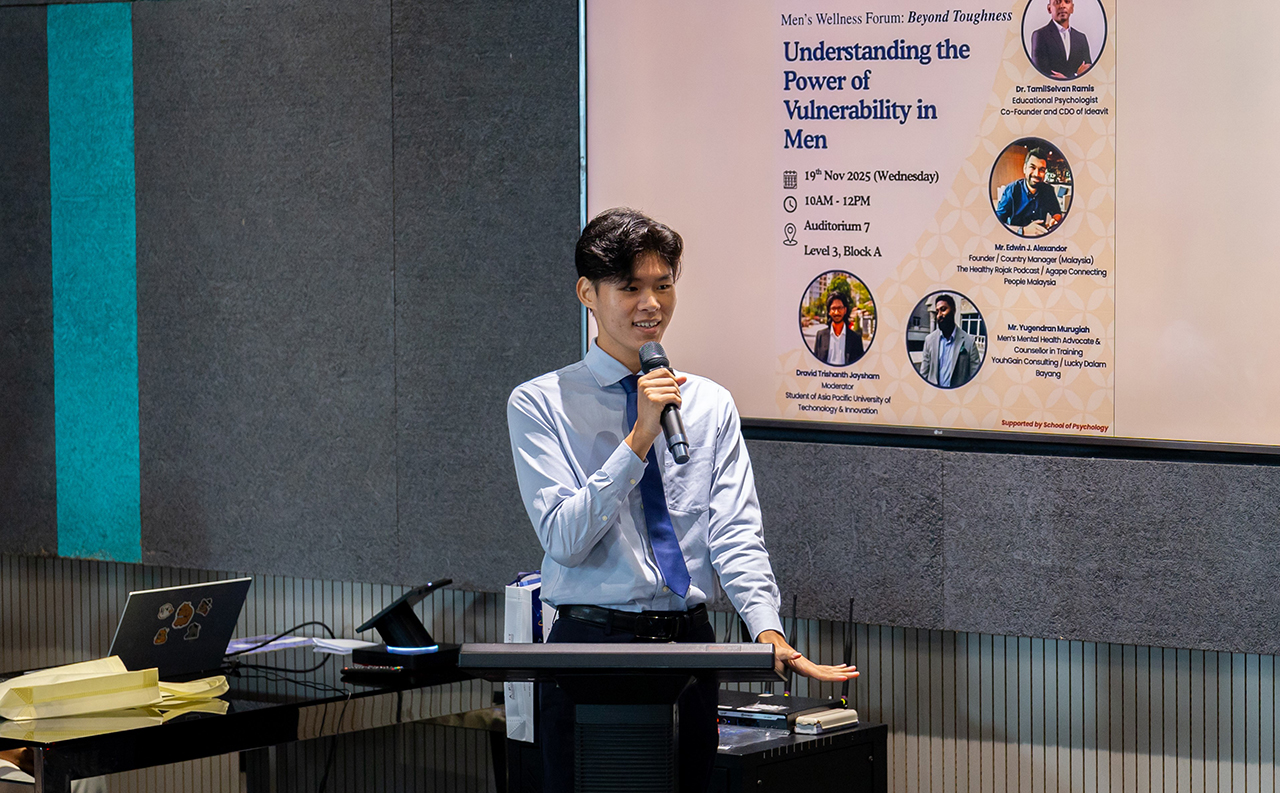
Recently, Asia Pacific University of Technology & Innovation (APU) Psychology Society hosted the Men’s Wellness Forum and Workshop with the theme “Beyond Toughness,” a student-led initiative, conducted across two sessions.
Organised by Psychology students and supported by Ms Dhevaania C Gendsen (Lecturer, School of Psychology at APU), Ms Amirah Husna Mohamad Hata Abdullah (Lecturer cum Psychology Lab Technician, School of Psychology at APU), and Ms Subashini Ganesan (Lecturer, School of Psychology at APU), the sessions aimed to raise awareness of men’s mental health through open dialogue and practical psychological insights, aligning with Sustainable Development Goal 3, 4, and 5 (SDG 3, SDG 4, and SDG 5).
Key contributors to the sessions included Zaynab Fawaz Mohammed Ahmed, Chua Khai Tim, and Abiiraami Elaiya Raja, who all serve as committee members of the APU Psychology Society.
Forum: Opening the dialogue on Men’s Emotional Well-Being
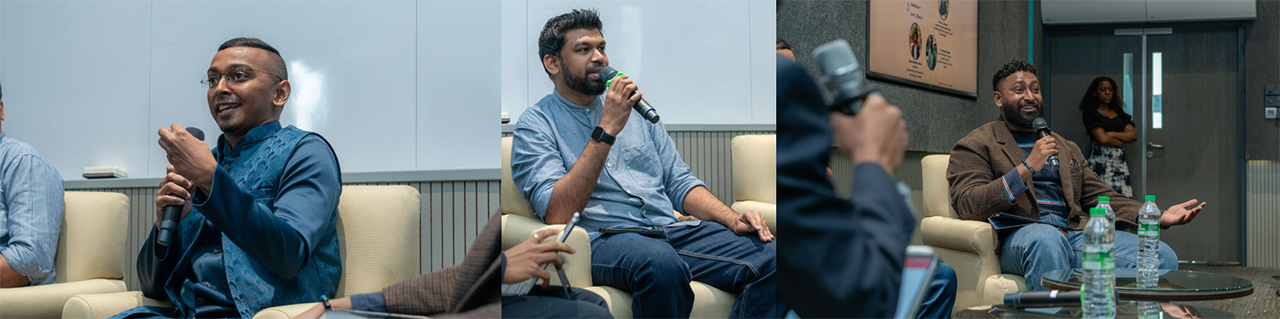
The first session, titled “Understanding the Power of Vulnerability in Men,” marked the opening of the Men’s Wellness Forum and Workshop, and set the tone for honest and reflective conversations around men’s emotional well-being.
The forum featured three guest speakers:
- Dr TamilSelvan Ramis, Lecturer, School of Psychology at APU and Co-Founder/Chief Development Officer of Ideavit
- Mr Yugendran Murugiah, Men’s Mental Health Advocate and Counsellor-in-Training at YouhGain Consulting
- Mr Edwin J Alexander, Founder of the Healthy Rojak Podcast and Country Manager (Malaysia) of Agape Connecting People Malaysia Sdn Bhd
Moderated by Dravid Trishanth Jaysham (Psychology student), the session encouraged students to engage critically with topics such as societal expectations of masculinity, emotional suppression, and barriers to help-seeking.
Panelists shared real-world insights and personal reflections, prompting students to reflect on how cultural norms influence men’s emotional experiences and coping behaviours.
Additionally, students played an active role throughout the session, particularly during the Q&A segment, where they raised questions on stigma, emotional regulation, peer support, and creating safe spaces for open communication.
Through these discussions, students gained a deeper understanding of how vulnerability can strengthen self-awareness, improve relationships, and support healthier approaches to emotional well-being.
Workshop: Strengthening Emotional literacy through Self-Awareness
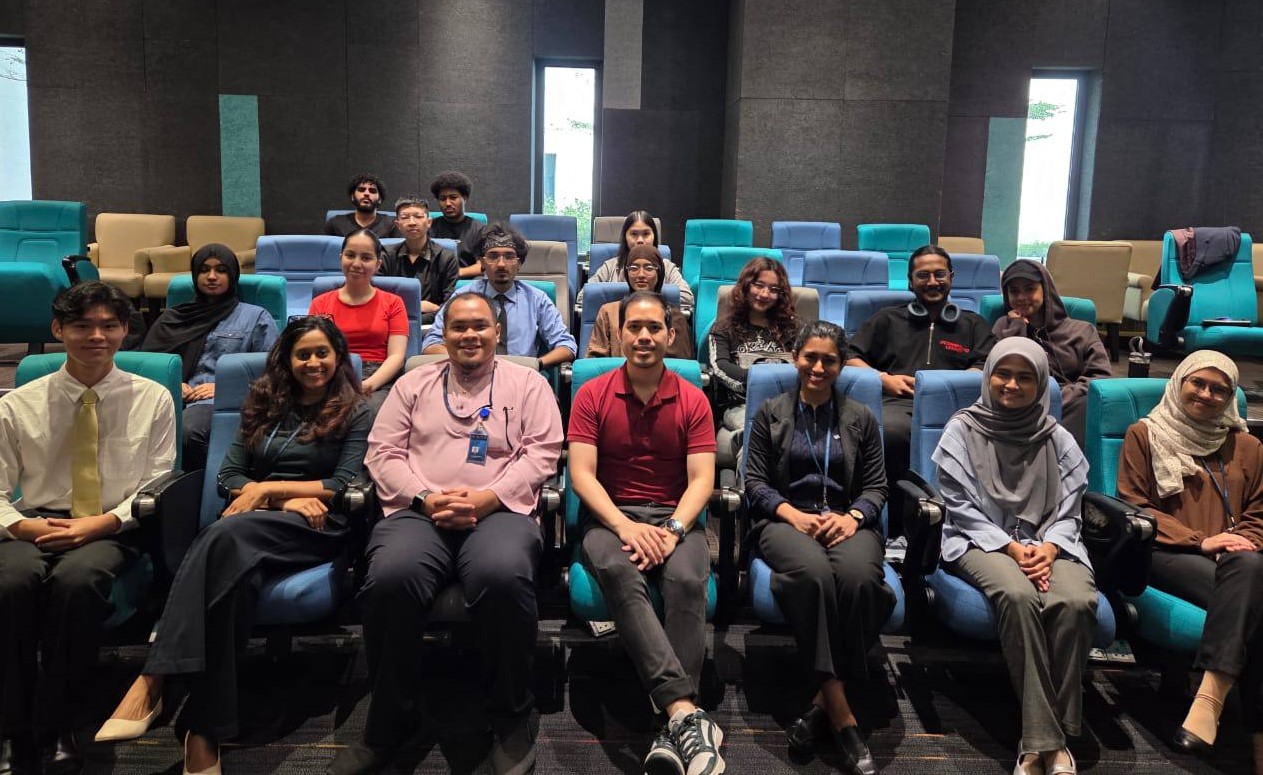
Building on the reflective discussions from the forum, the student-led workshop titled “Why-ired to be Emo: Understanding Universal Emotions and the Cognitive Triangle,” shifted the focus toward developing emotional awareness and practical cognitive skills.
Delivered by Mr Alvin Dan, a licensed and registered counsellor, the session featured guided discussions and hands-on exercises that helped students recognise emotional patterns and apply psychological concepts to real-life contexts.
Through interactive activities and guided reflection, students actively examined how emotions influence thoughts, behaviours, and everyday decision-making.
Students explored the six universal emotions; happiness, sadness, fear, anger, surprise, and disgust, gaining insight into their psychological functions and role in shaping behaviour.
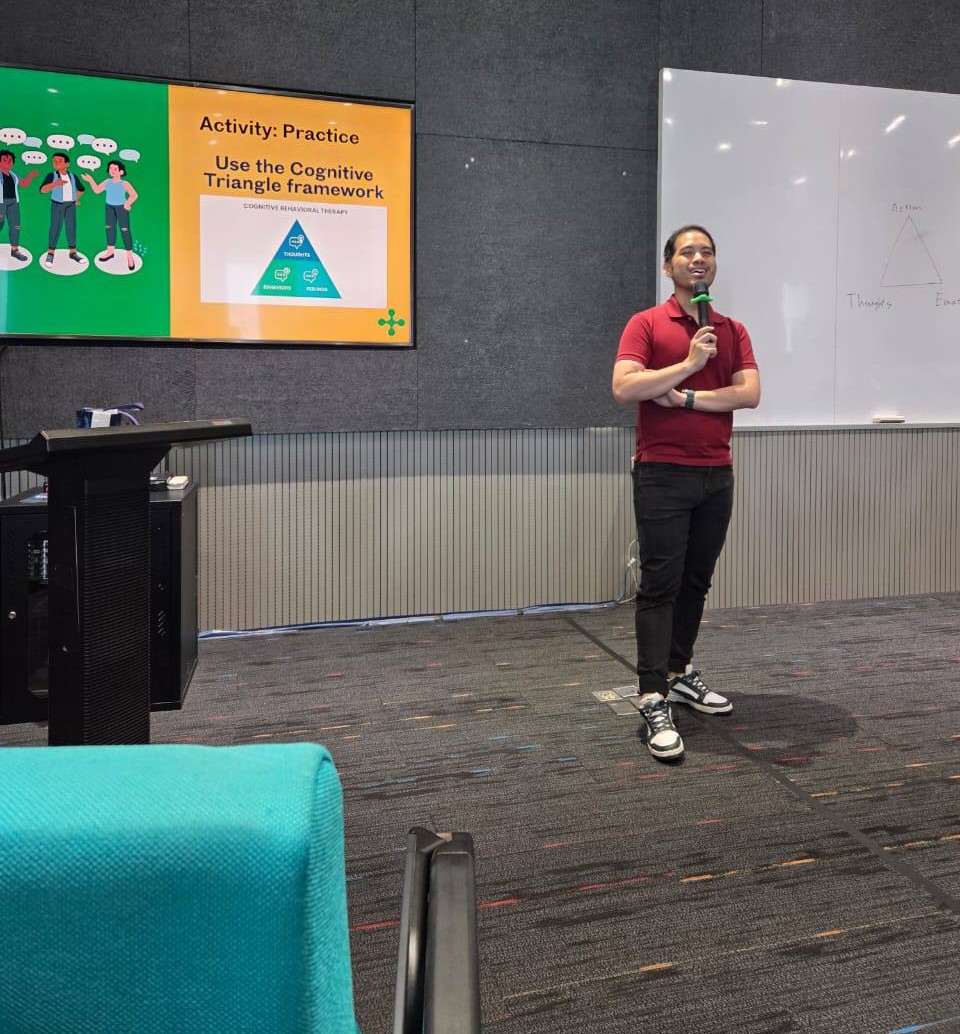
The session also introduced the Cognitive Triangle (a psychological model that explains how thoughts shape emotions and behaviours), helping students understand how adjusting thought patterns can influence emotional responses and support healthier coping in everyday situations.
The workshop’s practical approach helped students better recognise their emotional responses and coping patterns, with many noting a clearer understanding of how emotional regulation skills can support personal well-being and everyday resilience.
Strengthening Mental Health awareness
Together, both sessions made a meaningful impact in advancing awareness of men’s mental health by encouraging open dialogue, emotional understanding, and healthier attitudes toward vulnerability and help-seeking.
At the same time, the discussions broadened students’ perspectives on overall mental health, helping them recognise how emotional awareness, cognitive skills, and supportive communication are relevant to everyone, regardless of gender, and essential for fostering well-being and resilience within the wider community.
News & Happening
Download e-Brochures
Intake Calendar
Want to know more ?
Let’s Connect