Asia Pacific University of Technology & Innovation (APU) transformed its System Analysis and Design (SAD) module into an immersive campus-wide experience through the EcoTrace Challenge, where students acted as forensic system analysts to rescue a missing IoT-tracked orangutan by fixing a failing tracking system, blending logic, technology and wildlife conservation in a dynamic real-world setting.
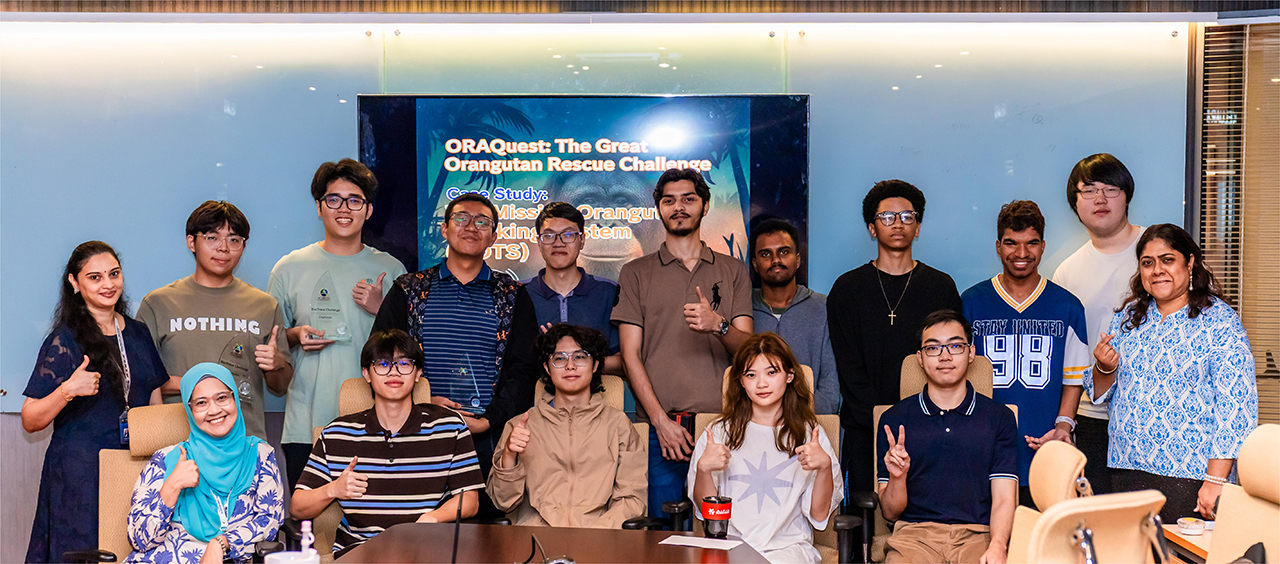
Asia Pacific University of Technology & Innovation (APU) students stepped out of the lecture hall and into a carefully crafted storyline in which ‘Bulan’, a wild orangutan, had vanished after her IoT tracking collar stopped transmitting.
The failure of the Missing Orangutan Tracking System (MOTS) triggered an urgent mission; diagnose the faults, redesign the system and prevent future breakdowns.
Teams raced across campus to uncover six QR-coded clues hidden behind riddles, each revealing flawed system requirements, faulty GPS logs and broken logic flows that required immediate analysis.
To successfully ‘rescue’ Bulan, students identified why a 60-minute alert lag was dangerously slow in an emergency scenario, redesigned communication pathways through Level 0 Data Flow Diagrams (DFDs) and proposed intelligent enhancements such as drone surveillance and AI-driven anomaly detection to predict system failures before they occurred.
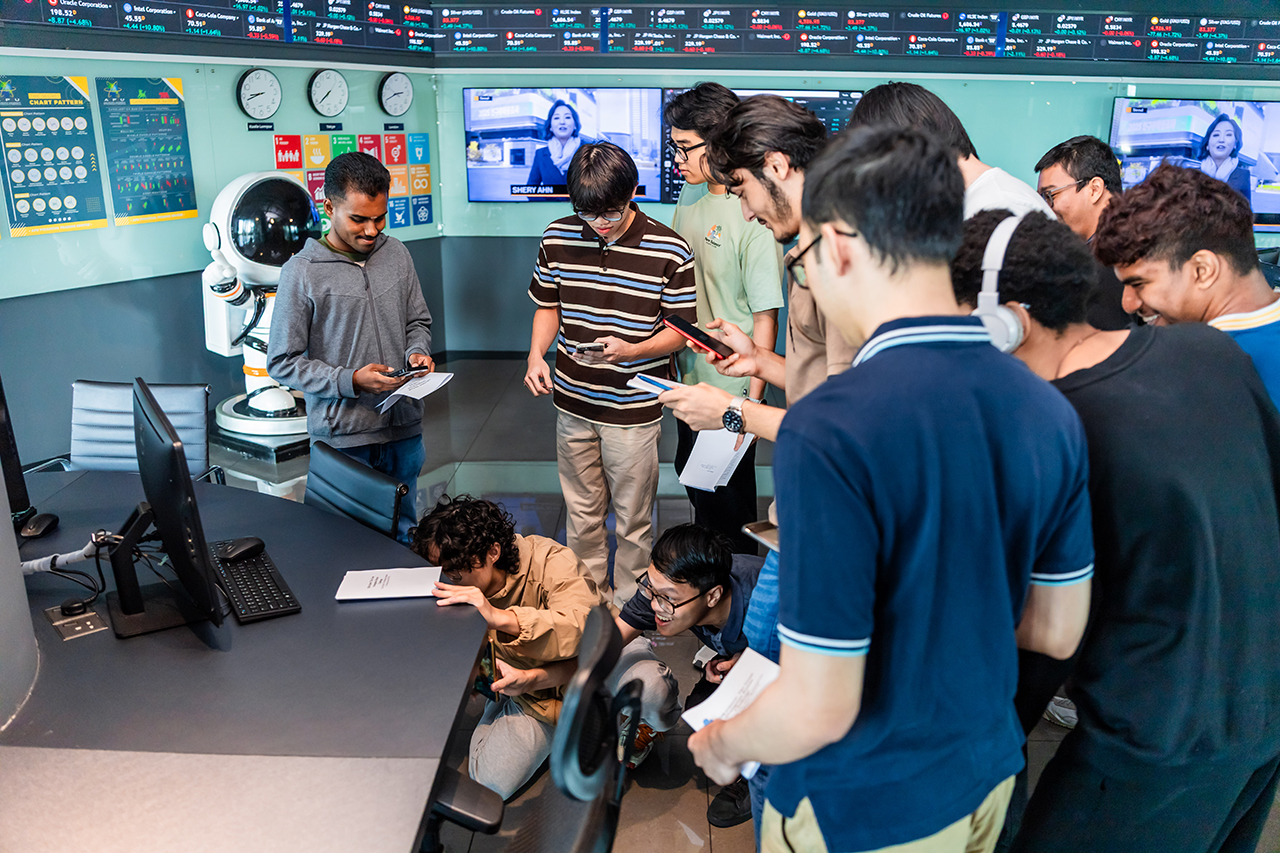
“The EcoTrace Challenge: Saving Bulan required not only technical accuracy but also critical thinking under time pressure. The goal was to bridge the gap between theory and the real world,” explained Associate Professor Ts Dr Vinothini Kasinathan.
She emphasised that by grounding SAD principles in wildlife conservation and digital innovation, students were not merely memorising diagrams but witnessing how ethical and well-designed systems could make a meaningful difference.
The activity transformed abstract frameworks into tangible experiences, allowing students to understand the real-world consequences of delayed alerts, weak requirement analysis and poor system integration.
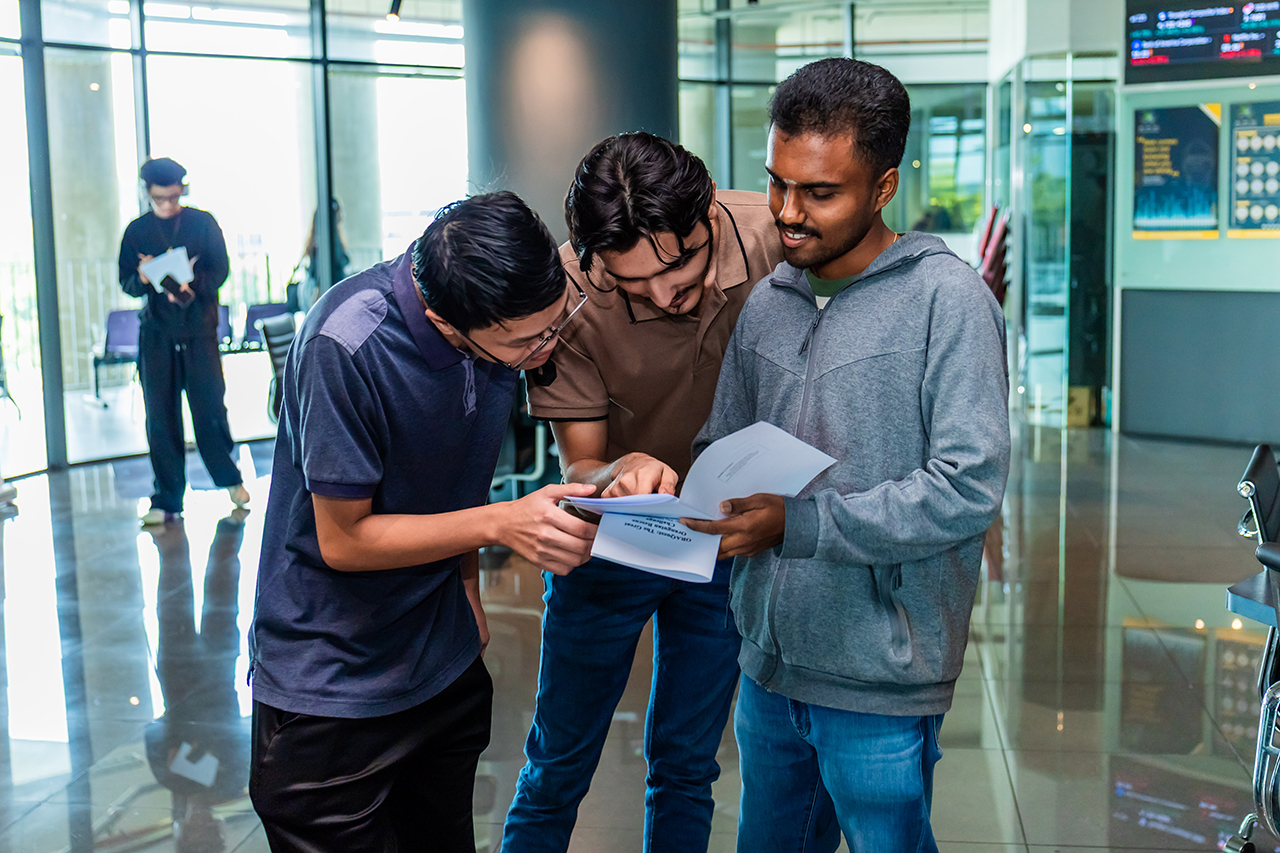
The competition unfolded with palpable energy as pairs of students moved swiftly between campus blocks, analysing battery bugs and null loops while refining their solutions.
Success was not determined solely by speed; the top teams distinguished themselves by presenting the most robust and practical system improvements, demonstrating their readiness for the demands of the technology industry.
The EcoTrace Challenge was conceptualised and led by Dr Vinothini, supported by two School of Computing (SoC) Senior Lecturers with expertise in System Analysis and Design, Ms Sarimah Samsudin and Ms Thavamalini Sivasamy.
Their collaborative effort modernised the curriculum by embedding elements of artificial intelligence and real-time systems thinking into a traditionally theoretical subject.
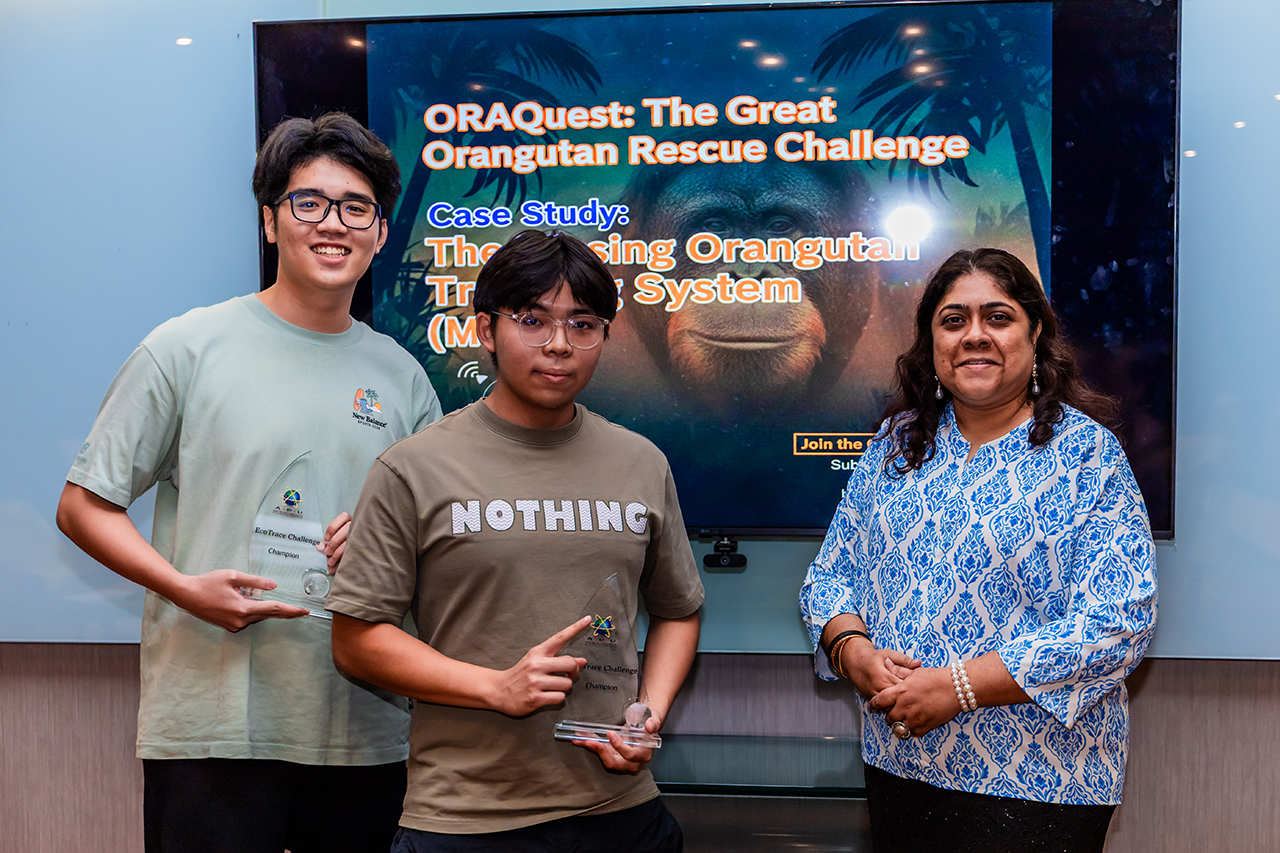
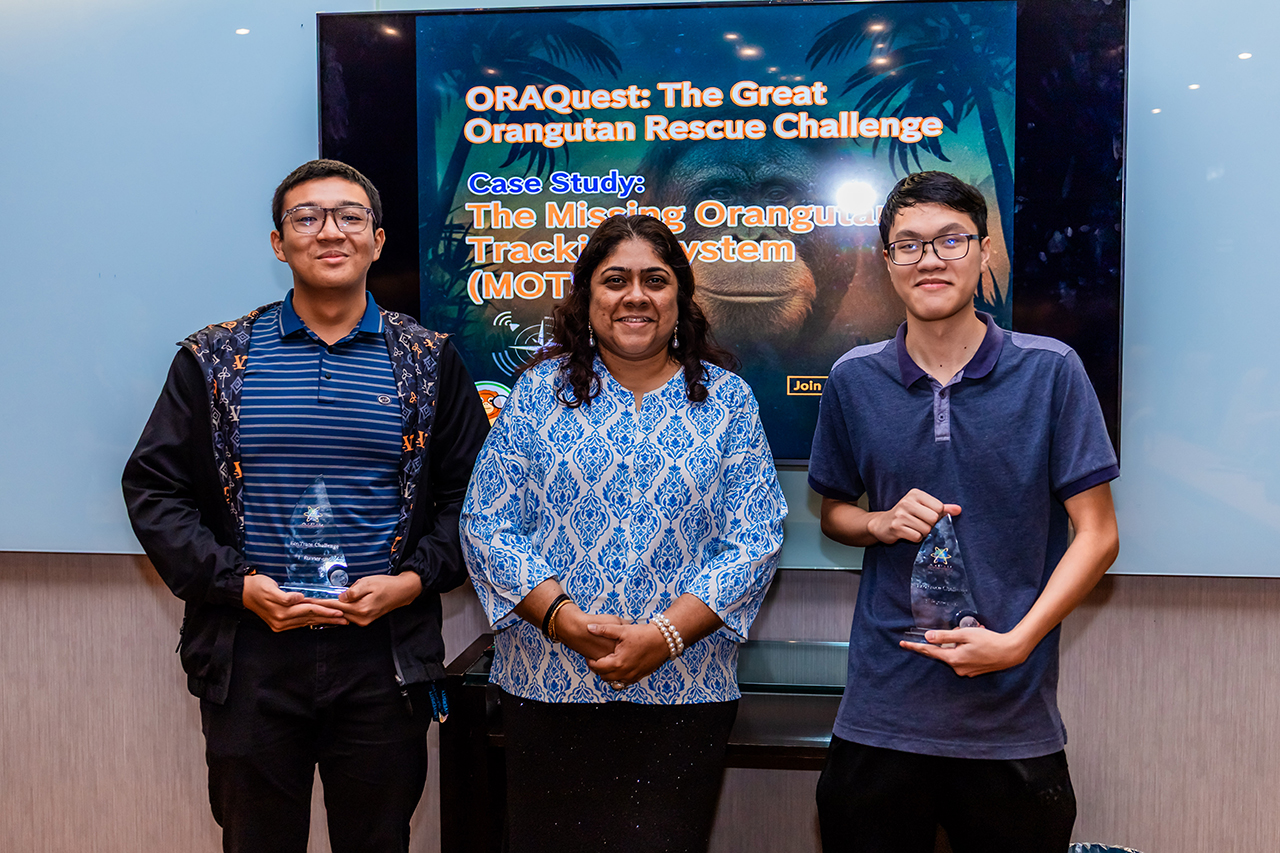
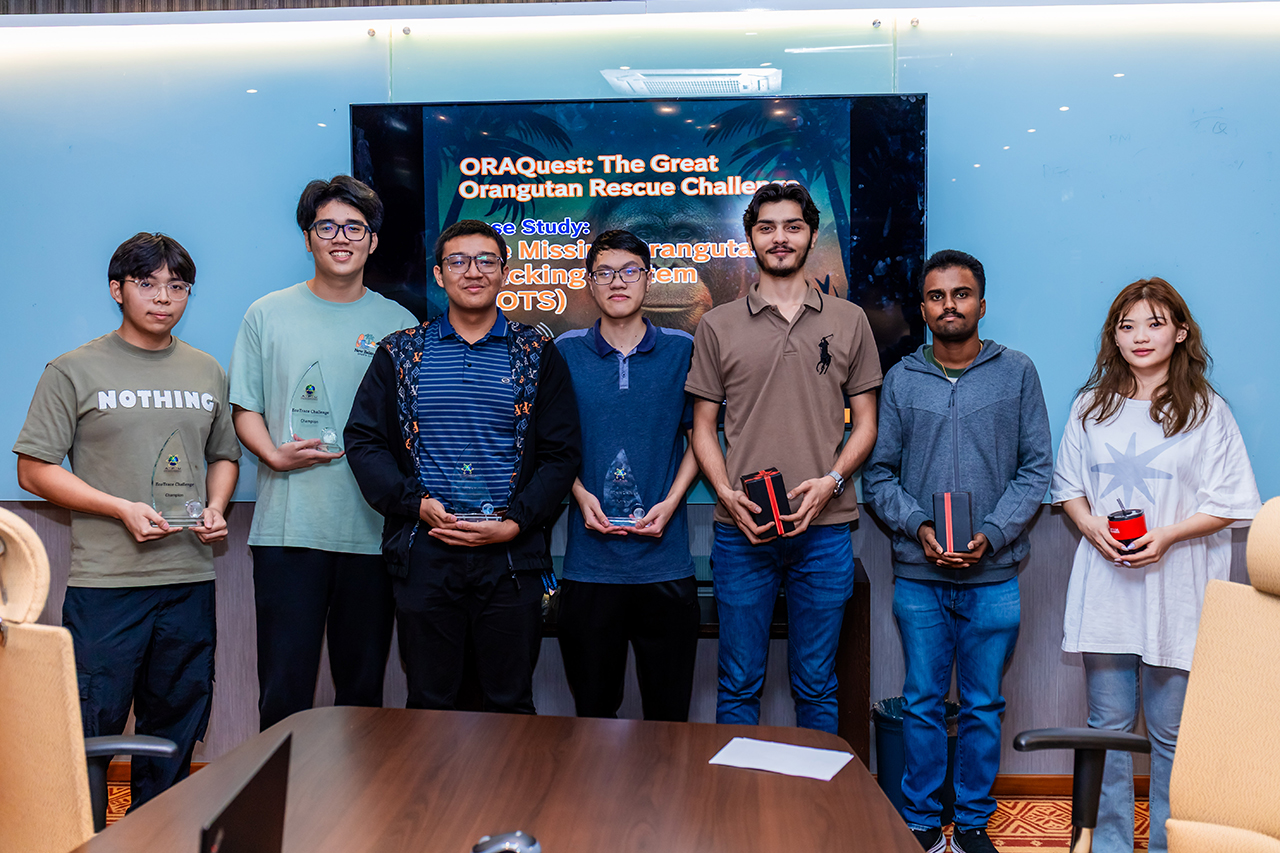
First place was awarded to Heng Wei Tong and Rex Lee Jun Heng from Malaysia. Reflecting on their experience, they shared that the EcoTrace Challenge was unlike any other assignment they had undertaken.
They admitted that System Analysis had often felt like drawing diagrams in isolation, but racing across campus to find Bulan brought the logic to life.
“Identifying the GPS battery bug and correcting the alert system under time pressure gave us a realistic taste of high-stakes problem-solving in the industry, and we described it as the moment when theory truly came together,” they said.
The first runner-up position went to Kyaw Lin Khant from Myanmar and Yap Teng Qian from Malaysia, while Muhammad Usman Arshad from Pakistan and Piriyan Raman from Malaysia secured second runner-up.
Lin Khant and Teng Qian described the competition as both fun and eye-opening, explaining that solving riddles and searching for clues around campus pushed them to think creatively and become more observant.
Although challenging, they found that teamwork made the experience more meaningful and appreciated the opportunity to explore different parts of the university while earning recognition for their efforts.
Through the EcoTrace Challenge, APU demonstrated that system design extended far beyond lecture slides.
By reimagining learning as an immersive mission, the university enabled students not only to study systems but to build, test and strengthen them within a living, practical environment, proving that intelligent system design could indeed create meaningful real-world impact.
News & Happening
Download e-Brochures
Intake Calendar
Want to know more ?
Let’s Connect