From psychological manipulation to digital exploitation, an international guest lecture at Asia Pacific University of Technology & Innovation (APU) brought Psychology and Cybersecurity students together to examine how human behaviour and technology intersect in an increasingly connected world.
A convincing message from an unfamiliar number, a seemingly harmless link, or a request for an urgent money transfer. Behind many cybercrimes lies something more complex than a technological vulnerability — the exploitation of human trust, emotions and decision-making.
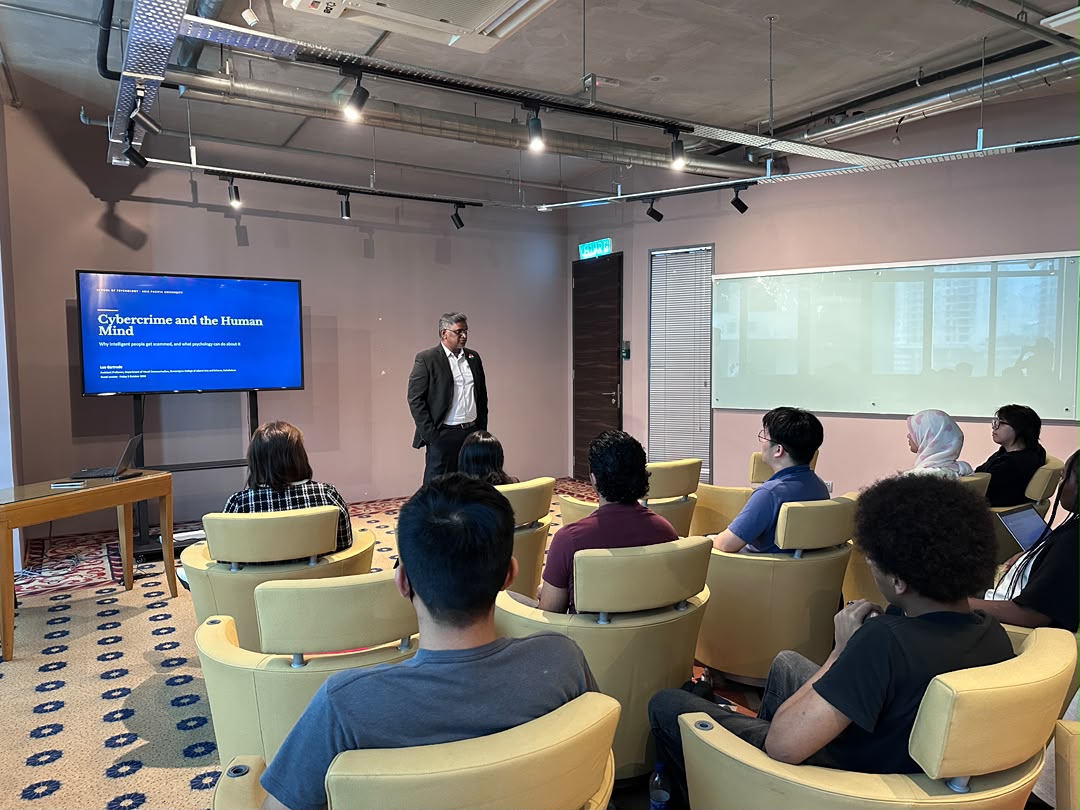
This intersection of psychology and technology took centre stage at “Cybercrime Across Borders: A Global Perspective,” an international guest lecture organised by APU’s School of Psychology (SoP) on 9 October 2026.
The session welcomed Dr Leo (David) Gertrude, Senior Academic Leader at Kumaraguru College of Liberal Arts and Science (KCLAS), Coimbatore, India, who engaged Psychology and Cybersecurity students in examining the evolving nature of digital threats and their consequences for individuals and communities.
Unmasking the Psychology Behind Digital Threats
With over two decades of experience in media education, research and institutional development across India and Malaysia, Dr Leo brought a multidisciplinary perspective shaped by his expertise in cyber safety, artificial intelligence, media and ethics.
Holding a PhD in Design and Visual Communications, he is also an author and Founder and Director of RIACME Research and Development, where his work extends into professional training and consultancy.
Drawing on his engagement with a ministry in India and related research, Dr Leo unpacked the mechanisms behind cybercrime, demonstrating how perpetrators exploit psychological vulnerabilities alongside technological opportunities.
He explored social engineering, where deception and manipulation persuade individuals to reveal sensitive information or surrender money; doxxing, the exposure of private information to enable harassment; and non-consensual intimate imagery (NCII), involving the sharing or threatened distribution of intimate content without consent.
These examples illustrated that cybercrime is not merely about compromised systems. It can also compromise personal safety, dignity, privacy and emotional well-being.
Turning Awareness into Everyday Protection
Bringing the discussion closer to home, Dr Leo stressed that cybercrime does not discriminate by age, education or social background.
His practical advice centred on a simple but powerful habit: pause before responding.
Whether confronted with a suspicious message, an unexpected financial request or an unfamiliar digital interaction, taking time to verify information can help interrupt manipulation before harm occurs.
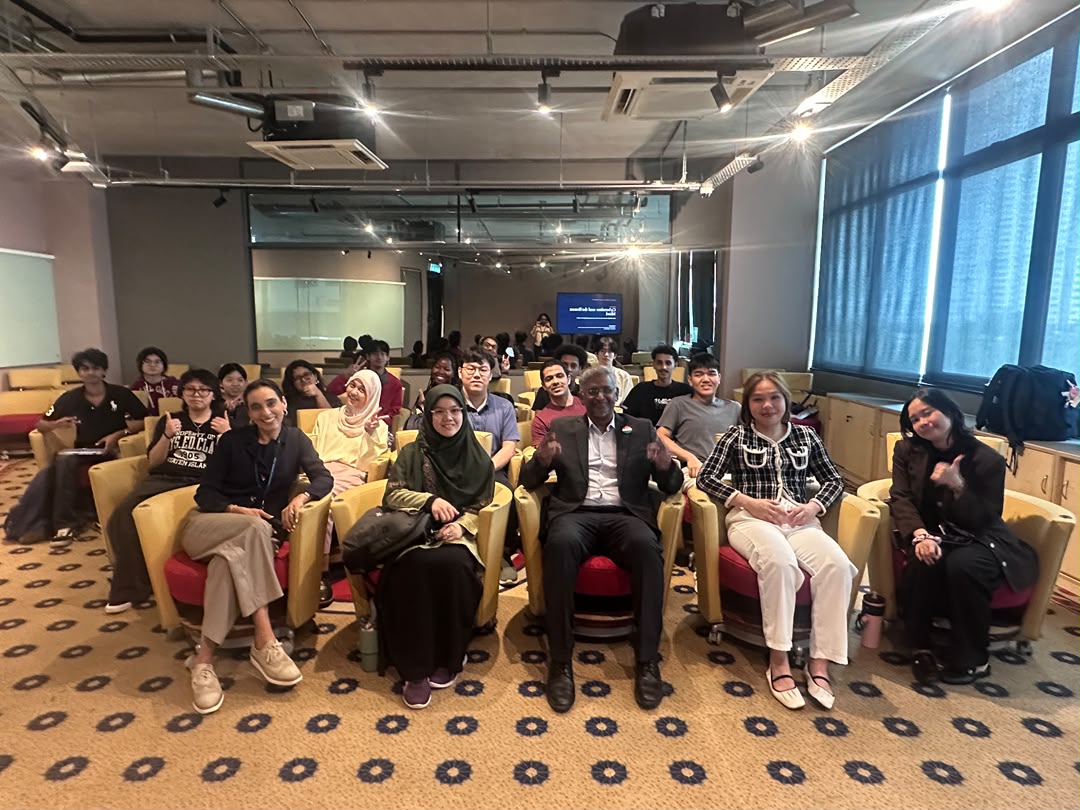
For APU students, the session connected classroom theories with real-world challenges, demonstrating how psychological insight can complement cybersecurity expertise in identifying threats, understanding victims' experiences and strengthening digital resilience.
Initiated through an invitation by Ms Dhevaania C. Gendsen, Lecturer and Programme Leader at SoP, the session encouraged students to look beyond their respective disciplines.
Ms Asha Dullabh, Senior Lecturer at SoP and Community Wellbeing Specialist, APU, similarly emphasised the importance of integrating psychology, cybersecurity, media and design to better understand how human behaviour and digital environments influence one another.
Strengthening Learning Through Global Academic Partnerships
Beyond cybercrime awareness, the lecture reinforced APU’s longstanding academic relationship with Kumaraguru College, creating opportunities for students to engage with international expertise and perspectives beyond Malaysia.
Reflecting on the initiative, Ms Vinorra Shaker, Head of SoP, said:
“Understanding cybercrime requires us to connect human behaviour with technological knowledge. Bringing students from psychology and cybersecurity together prepares them to respond thoughtfully to digital challenges, while our valued relationship with Kumaraguru College continues to enrich their learning through international perspectives.”
The initiative also supported the United Nations Sustainable Development Goals (SDGs), particularly SDG 4 (Quality Education), SDG 16 (Peace, Justice and Strong Institutions) and SDG 17 (Partnerships for the Goals).
Ultimately, the exchange reinforced a vital lesson: building a safer digital society requires not only stronger technological defences, but also a deeper understanding of the people behind the screens.
News & Happening
Download e-Brochures
Intake Calendar
Want to know more ?
Let’s Connect