Created by Far Out Solutions and Kiranamaya, CIPTA 2026 debuted at APU with 22 School of Computing (SoC) students taking part in a 2.5-hour mini-hackathon to build applied AI prototypes preserving Malaysian heritage.
Image
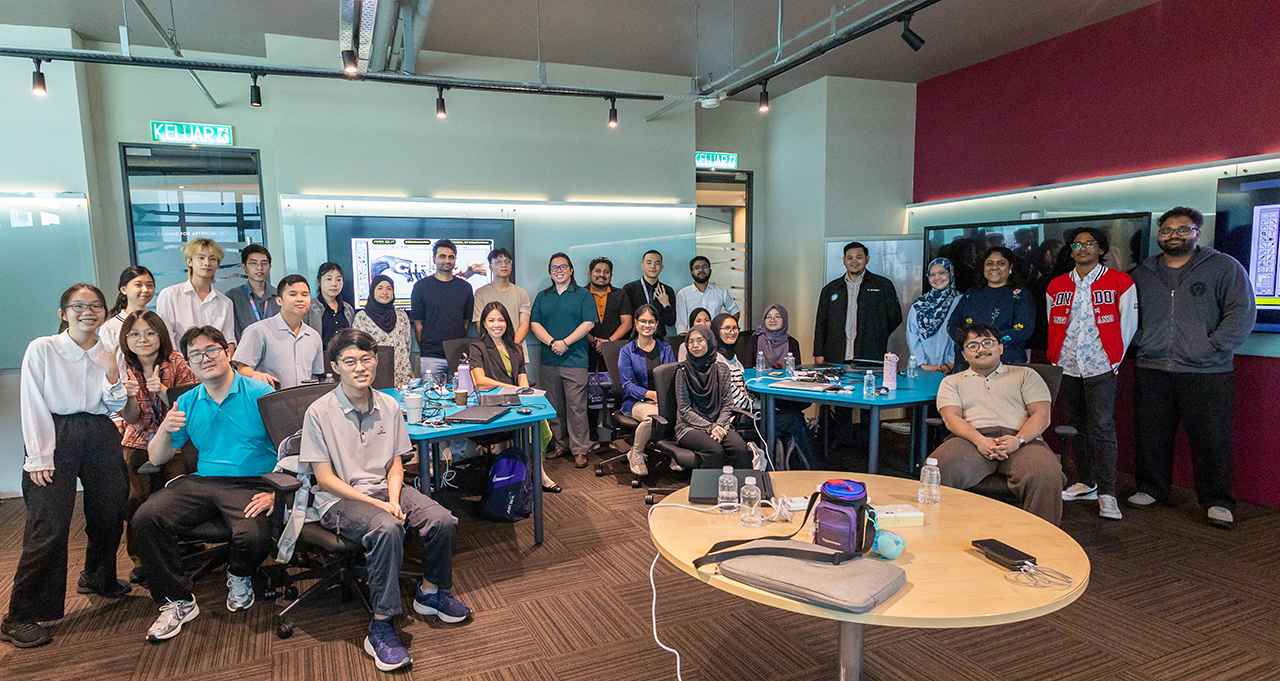
Creating Impact with People, Technology, and AI (CIPTA) 2026 is a groundbreaking applied Artificial Intelligence (AI) initiative conceptualised and driven by technology innovators Far Out Solutions and Kiranamaya, in collaboration with Asia Pacific University of Technology & Innovation (APU) academic leadership — Associate Professor Ts Dr Vinothini Kasinathan, Ms Sarimah Samsudin, and Ts Muhammad Nur Affendy Nor’a.
Designed to bridge the gap between classroom theory and industry-grade deployment, CIPTA launches its inaugural university engagement series at APU with a mini-hackathon, challenging 22 School of Computing (SoC) participants, spanning diploma to master’s programmes, to build practical, culturally grounded AI solutions under intense time constraints.
Pushing students to transform bold ideas into working prototypes in just 2.5 hours, the initiative serves as a high-octane masterclass delivered directly by industry experts.
Far beyond a typical coding sprint, CIPTA places participants at the intersection of technological innovation, real-world problem-solving, and culture.
Participants are tasked with creating AI agents and tools that are robust, accurate, and responsible, exploring how generative and agentic AI can unlock entirely new ways for audiences to experience traditional crafts, museum collections, fine art, and national landmarks.
They design multilingual AI assistants and interactive digital companions capable of sharing rich narratives, making regional knowledge effortlessly accessible, and curating immersive visitor journeys.
Alongside these applications, other challenge briefs target pressing operational demands across tourism, public service delivery, and enterprise customer experience, giving students direct exposure to enterprise-grade AI applications.
“The main reason for collaborating with industry partners was to raise awareness of the meaningful connection between AI and culture. CIPTA strengthened our Innovation in Action learning journey through industry immersion,” explained Associate Professor Ts Dr Vinothini Kasinathan.
“A key strength was the two inclusive tracks — technical and non-technical — supported by seven real-world case studies.
“Highlights like the Museum Companion and Heritage Authenticity Assistant showed how AI delivers culturally sensitive storytelling without flattening heritage identity, while direct expert mentorship encouraged students to see culture as a vital arena for future innovation.”
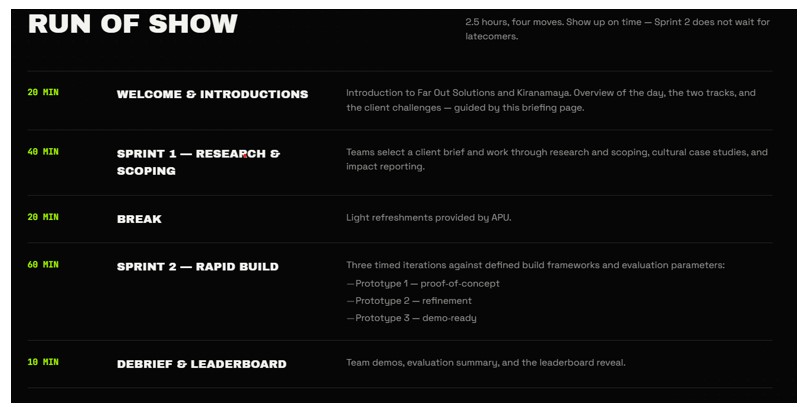
Divided into teams, all students race through four hyper-focused stages: initial briefing, research and scoping, rapid prototyping, and the final high-stakes demonstration.
The pressure-cooker environment requires seamless cross-disciplinary collaboration; while some team members map out complex user journeys and hone commercial pitches, others engineer automated data flows, integrate dynamic prompts, and configure multi-step agentic systems logic.
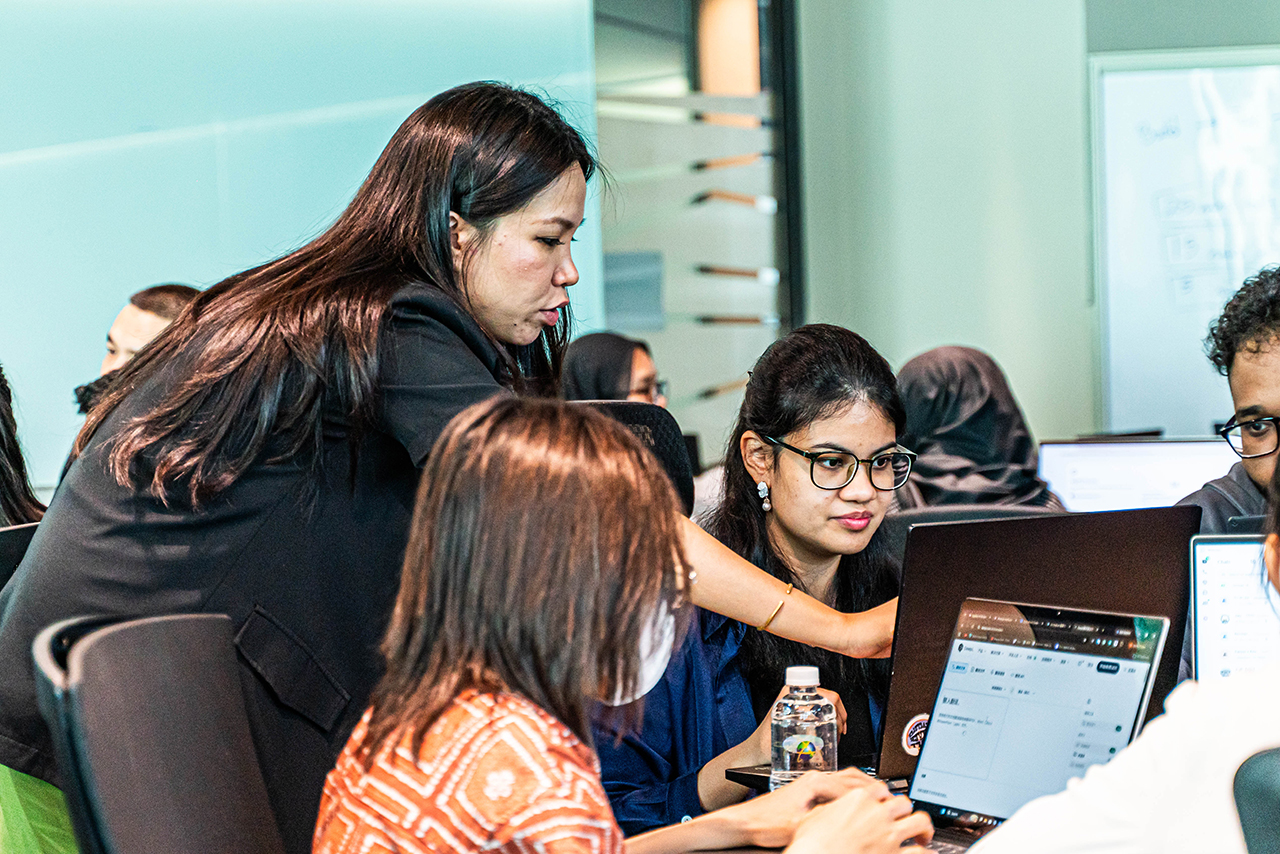
The exercise demonstrates a core philosophy of the CIPTA framework: impactful AI solutions require far more than raw code, demanding sound reasoning, precise communication, and a human-centred approach to problem solving.
Rather than favouring superficial technical tricks or flashy presentation slides, CIPTA’s evaluation rubric strictly prioritises real-world utility and sound logic.
Teams are judged on continuous benchmarks including factual accuracy and reliability to mitigate hallucinations and ground outputs in verifiable data, conversational flow and coherence to ensure natural interactions, prompt architecture and logic for robust system workflows, as well as overall feasibility and commercial viability to balance innovation with realistic implementation costs.
To incentivise continuous improvement under pressure, the event leaderboard aggregates points across all three build phases rather than relying solely on a final pitch score.
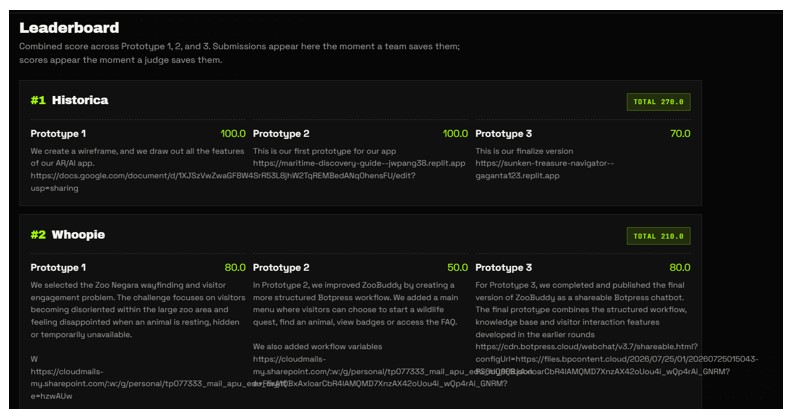
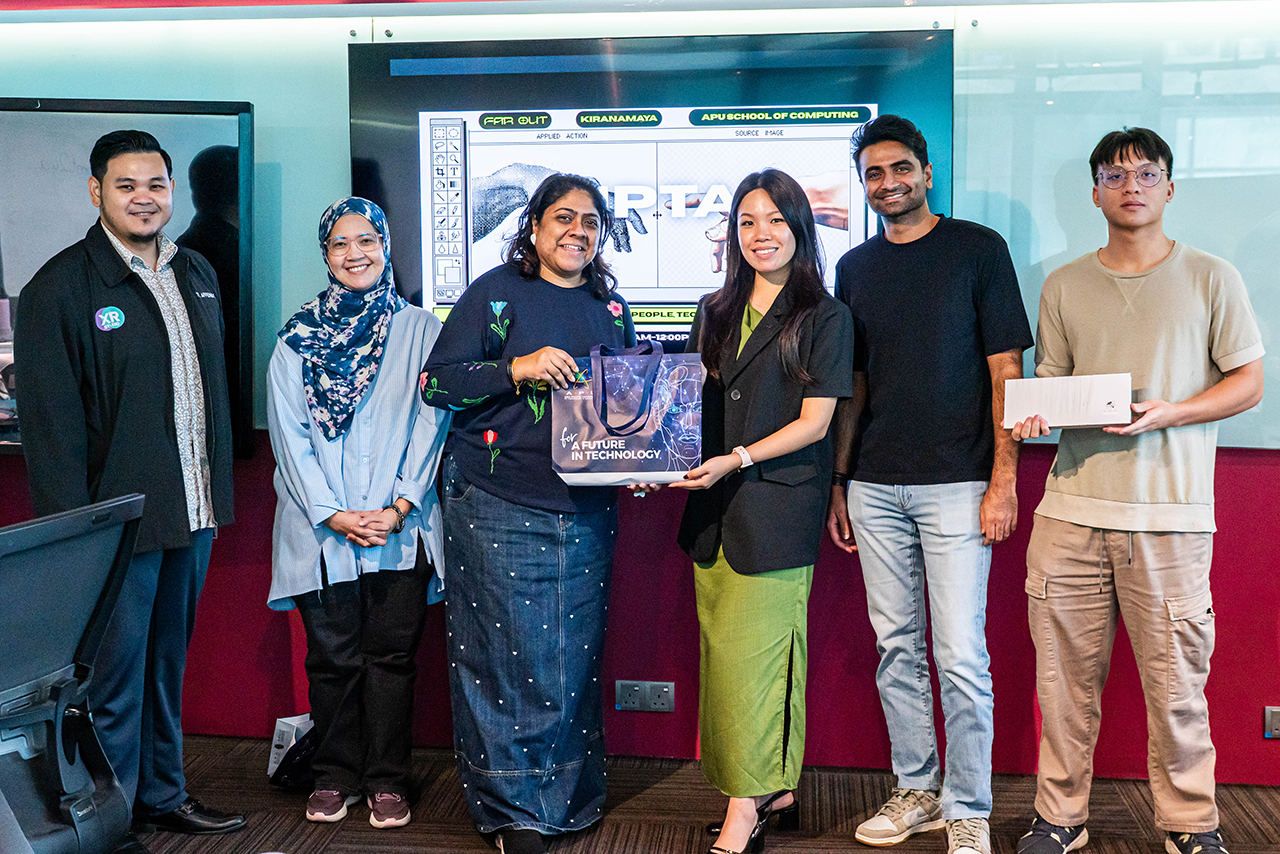
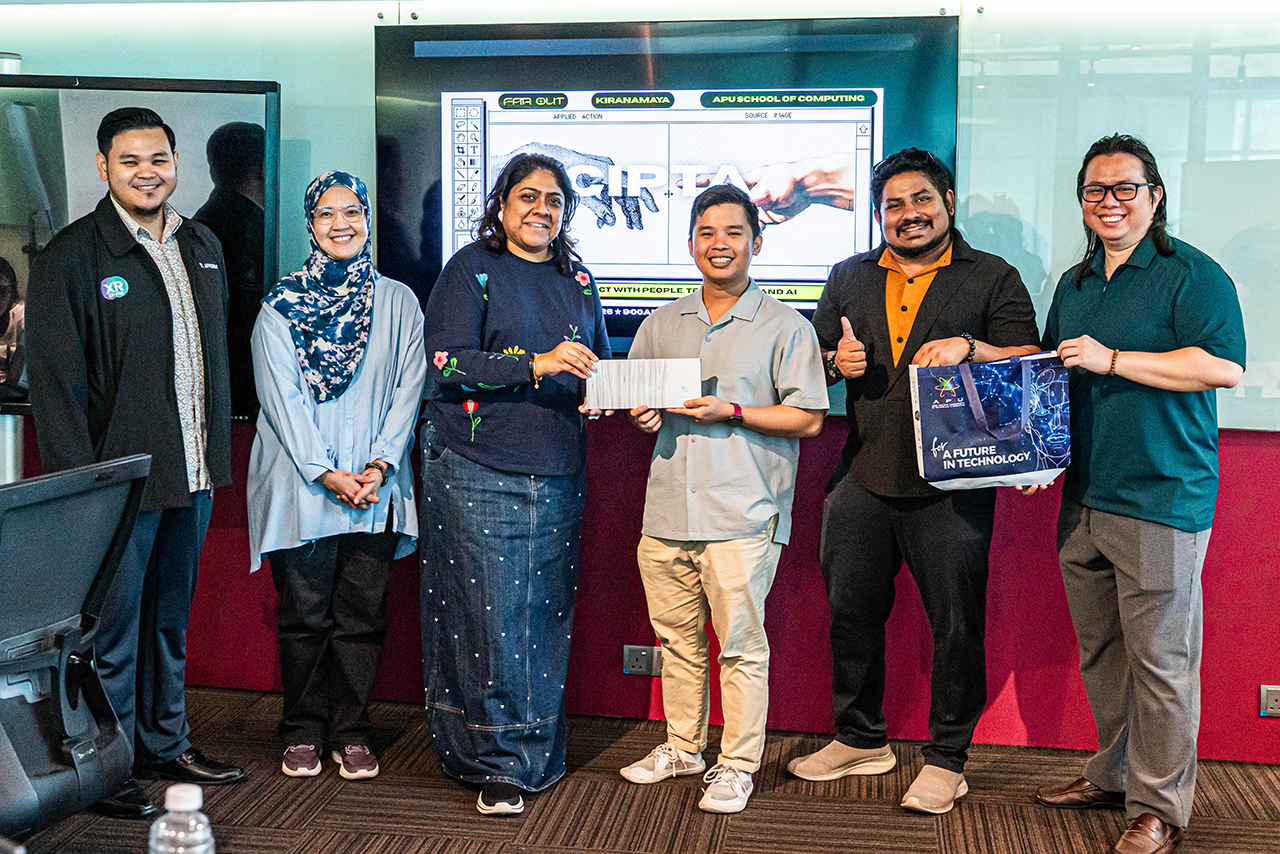
As the final countdown ends, team Historica — comprising Kamal Imran Radhi, Pang Jun Wen, and Lin Likang — takes home first place with an impressive score of 270 points, having dominated the leaderboard through superior factual precision, seamless conversational logic, and highly optimised prompt design.
Team Whoopie follows closely to claim a strong second place with 210 points. The winning prototype illustrates how multidisciplinary teamwork, clear strategic thinking, and rapid iteration can transform a complex industry brief into an operational AI prototype in under three hours.
“I came to this session alone and met two new friends from engineering backgrounds. It was a great experience developing an idea together within just a few hours and having company representatives appreciate our work,” said Kamal Imran representing team Historica.
“This experience showed me how new friendships, multidisciplinary teamwork, and industry guidance can transform an initial idea into meaningful innovation.”
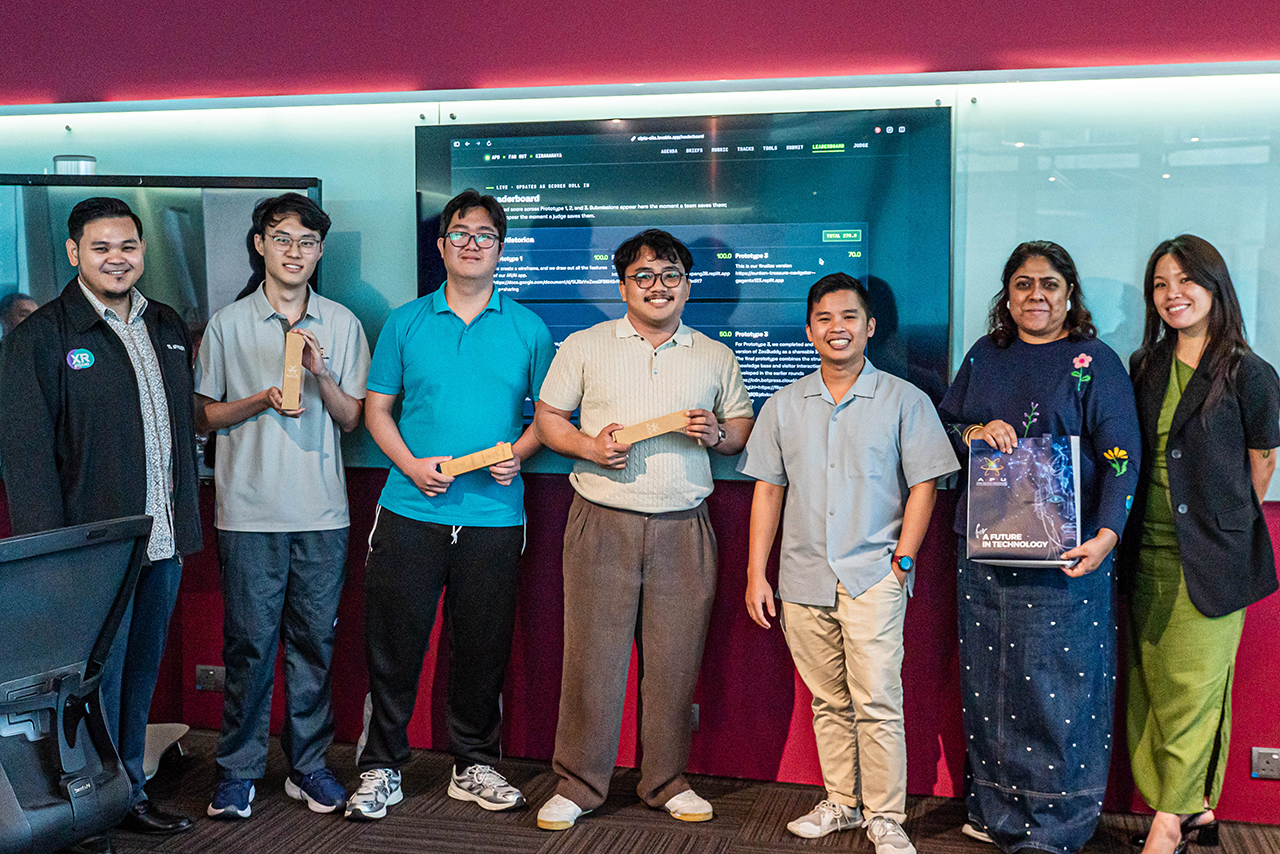
By the end of the event, participants have built functional AI prototypes while gaining practical mastery in prompt design, systems architecture, team execution, and strategic tech communication.
More importantly, CIPTA instils a responsible, human-first approach to technology deployment, proving that advanced AI can safeguard cultural identity just as effectively as it drives enterprise innovation.
As Far Out Solutions and Kiranamaya prepare to expand the CIPTA model across additional universities and higher learning institutions, the initiative stands as a new benchmark for industry-led AI education.
News & Happening
Download e-Brochures
Intake Calendar
Want to know more ?
Let’s Connect