Asia Pacific University of Technology & Innovation (APU) engineering students attended Infineon Technologies’ EnvisionTech Malaysia 2026, gaining hands-on exposure to cutting-edge advancements in edge AI, wide-bandgap semiconductors, IoT, green energy, and collaborative robotics to engage directly with industry engineers and bridge classroom theory with real-world semiconductor applications.
Image
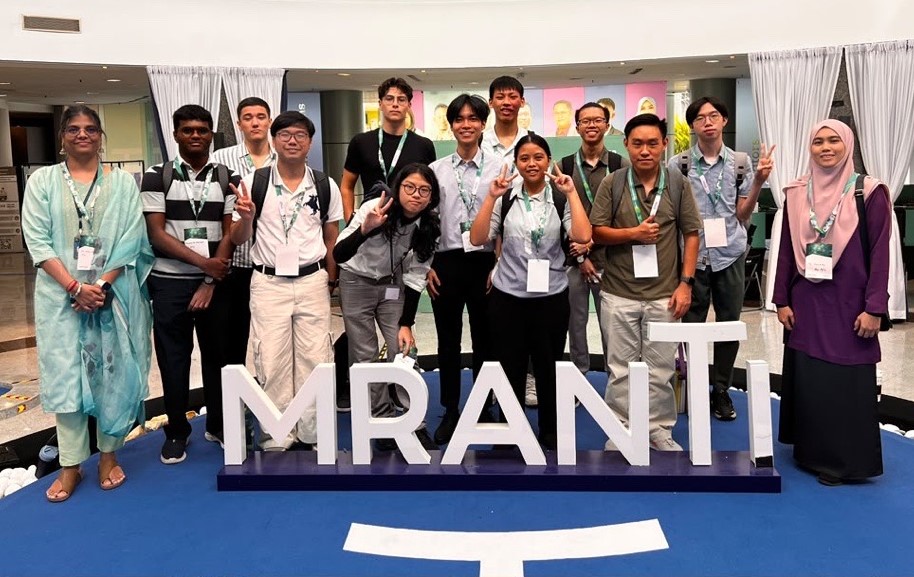
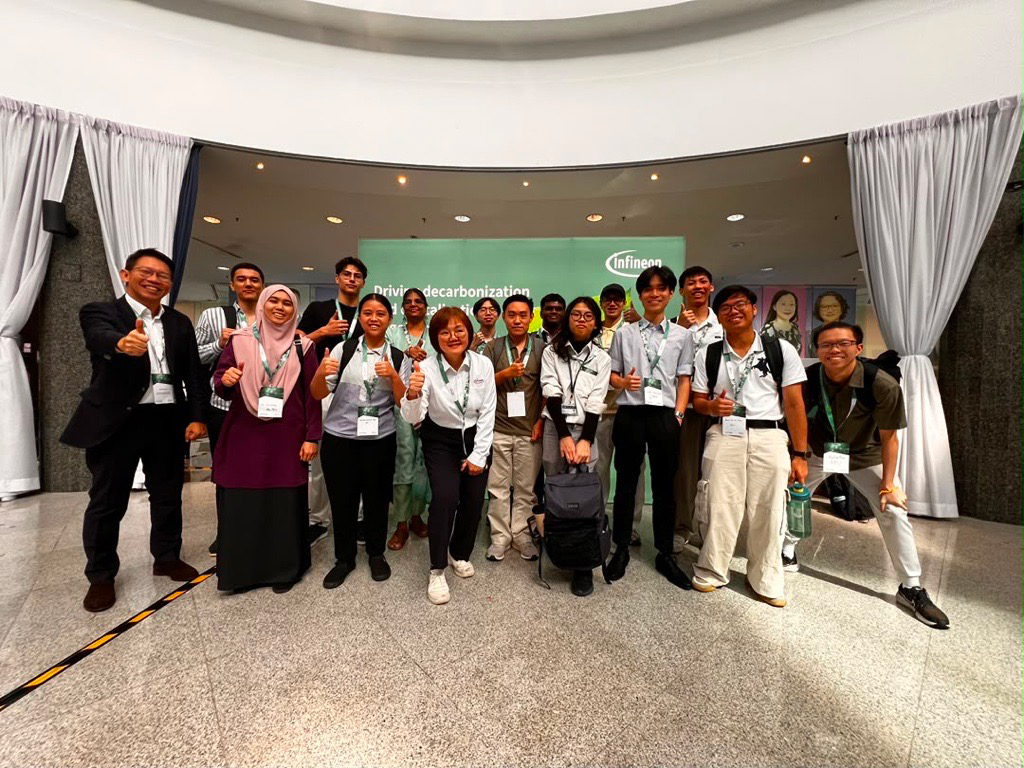
On 30 July 2026, fourteen ambitious engineering students from Asia Pacific University of Technology & Innovation’s (APU) School of Engineering (SoE) attended EnvisionTech Malaysia 2026, Infineon Technologies’ premier annual conference held at the Malaysian Research Accelerator for Technology and Innovation (MRANTI) building in Bukit Jalil, Kuala Lumpur.
Organised by Ir Ts Dr Dhakshyani Ratnadurai, with academic guidance provided on the day by Dr Hazwani Mohd Rosli and Dr Mukil Alagirisamy, the trip offered students a front-row seat to the rapid evolution of artificial intelligence (AI), the Internet of Things (IoT), and green energy.
The afternoon kicked off inside the MRANTI auditorium, where keynote speakers tackled the dual engines driving modern industry: digital transformation and the global energy transition.
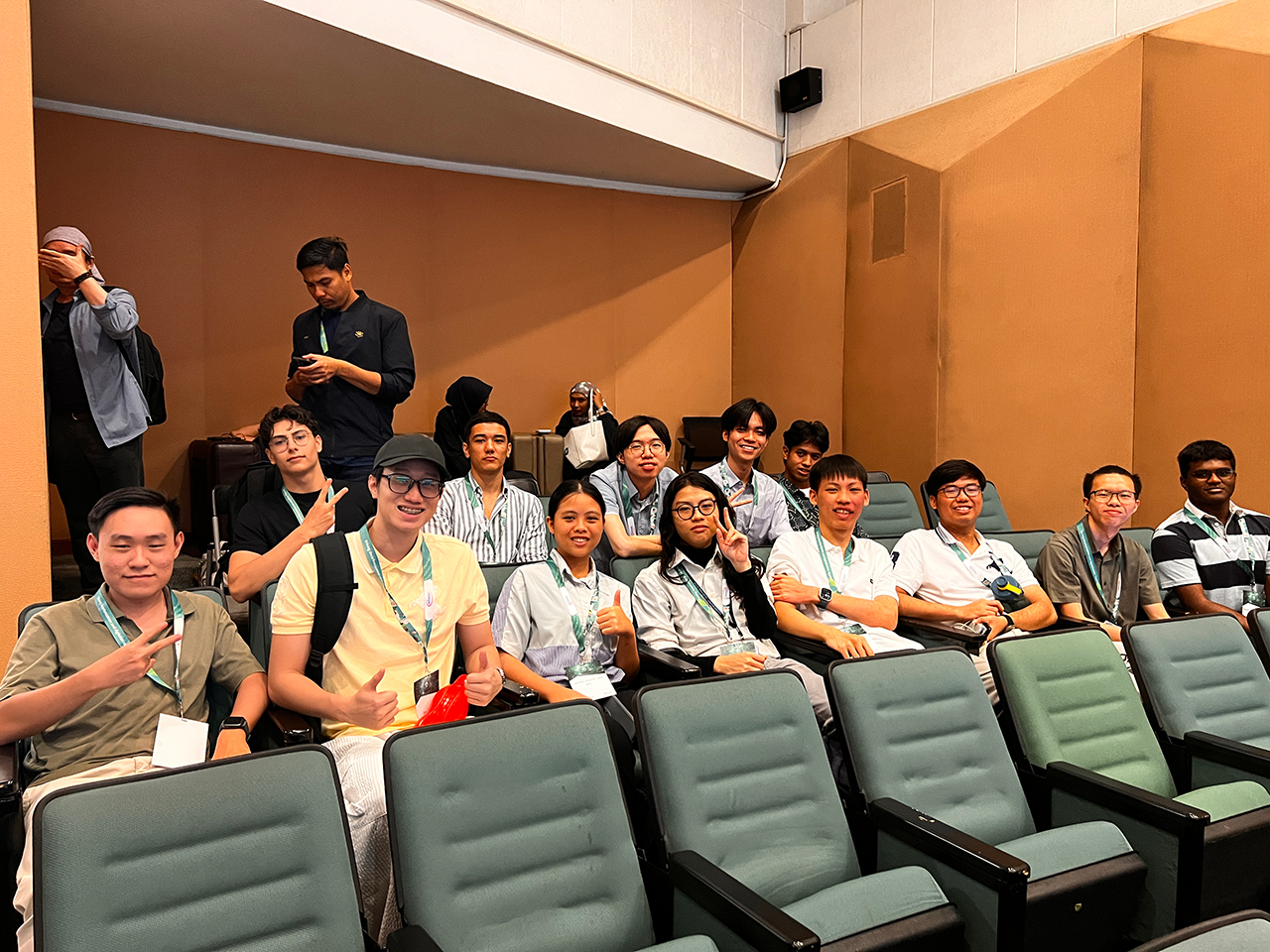
Presentations mapped out the shift towards net-zero targets, exploring how the automotive and manufacturing sectors were systematically replacing mechanical systems with high-efficiency electrical drives under Industry 4.0.
A standout session delivered by Ms Sarah Woo, Regional Marketing Director for Smart Home and Building at Infineon Technologies Asia Pacific, pulled back the curtain on the critical demands placed on components powering robotics and autonomous drones, underscoring how hardware reliability, power efficiency, and hardware-level security had become non-negotiable.
Beyond the auditorium, the venue foyer transformed into a vibrant exhibition floor where classroom theories collided with commercial reality.
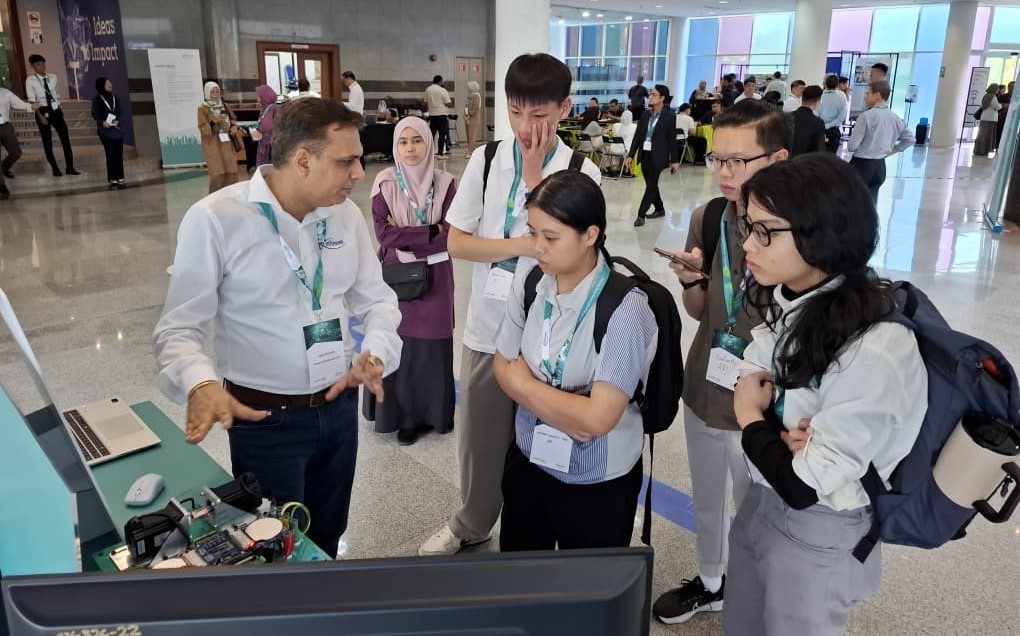
APU students immersed themselves in interactive demonstrations, diving into nuanced technical discussions with Infineon’s application engineers on power electronics, embedded systems, and control engineering.
The microcontrollers on display featured the PSOC Edge E8 series, built on Arm Cortex architecture to execute complex machine learning workloads directly on-device rather than relying on the cloud.
A key highlight was the E84 human-machine interface kit, which integrated a four-inch capacitive touchscreen, digital and analogue microphones, embedded vision cameras, and a 60 GHz radar sensor for gesture and proximity tracking, all driven via the ModusToolbox environment and DEEPCRAFT AI toolset.
Advanced wide-bandgap power devices also took centre stage, with silicon carbide and gallium nitride transistors demonstrating far superior switching speeds and minimal thermal waste compared to traditional silicon.
The hardware on display included a 1 kW inverter combining 650 V SOI EiceDRIVER gate drivers, a 140 W full-GaN reference design, and a high-efficiency 3.3 kW bridgeless totem-pole power factor correction board tailored for data centre power supplies.
A focused presentation highlighted the dramatic performance leap of solid-state relays over traditional electromechanical switches, operating roughly ten times longer over their lifespan with lightning-fast response times of 60 microseconds while eliminating contact bounce and arcing entirely across electric vehicle battery disconnects, solar inverters, and industrial automation.
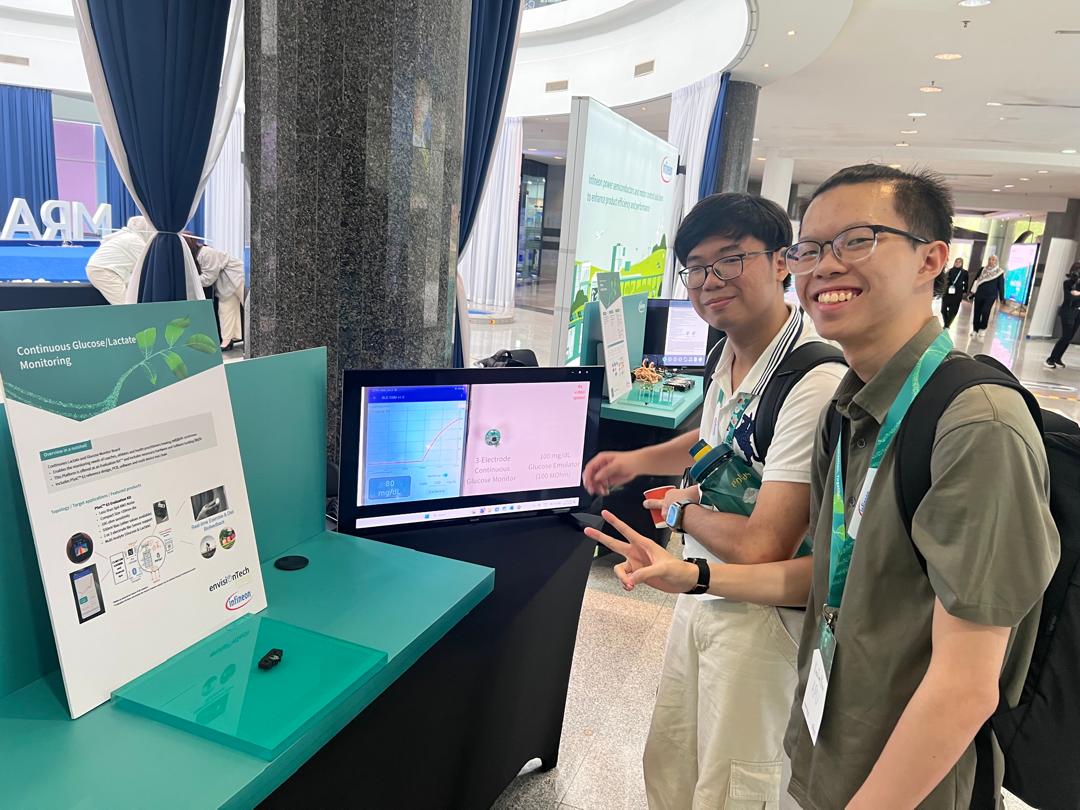
Showcasing the intersection of medical tech and embedded hardware, a continuous glucose and lactate monitoring platform built on the PSoC 63 evaluation kit demonstrated how low-noise analogue front-ends and Bluetooth connectivity enabled real-time metabolic tracking for both professional athletes and medical patients.
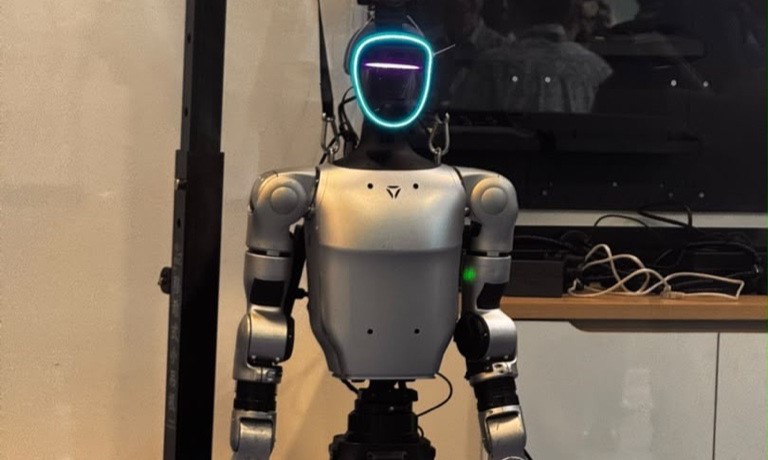
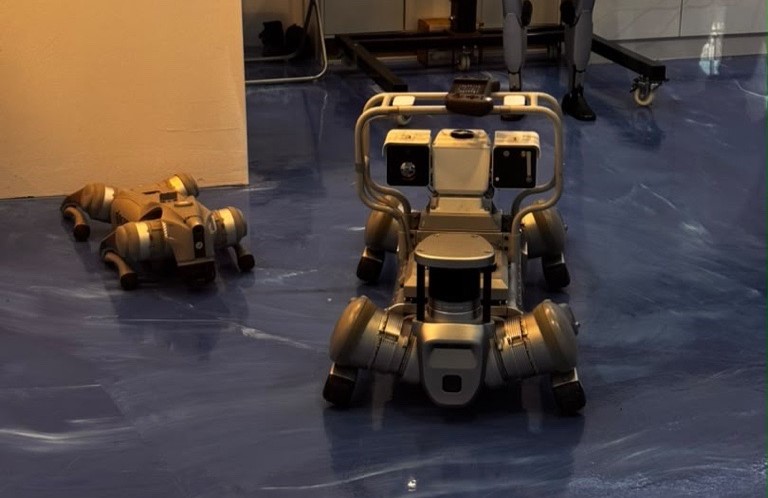
Stealing much of the spotlight was an autonomous multi-robot ecosystem that paired a humanoid robot with mobile robotic platforms.
Fuelled by computer vision, sensor fusion, and autonomous navigation, the setup illustrated how collaborative robotics could handle complex security, surveillance, inspection, and disaster-response tasks in real-world environments.
For the visiting engineers, the event provided an invaluable bridge between textbook principles and commercial implementation.
Debating thermal management strategies in gallium nitride converters or analysing memory constraints when deploying AI models onto microcontrollers offered a level of practical clarity that lectures alone simply could not replicate.
APU’s SoE extends its sincere gratitude to Infineon Technologies and MRANTI for opening their doors to the next generation of tech innovators and looks forward to organising further high-impact industry immersions in the future.
News & Happening
Download e-Brochures
Intake Calendar
Want to know more ?
Let’s Connect