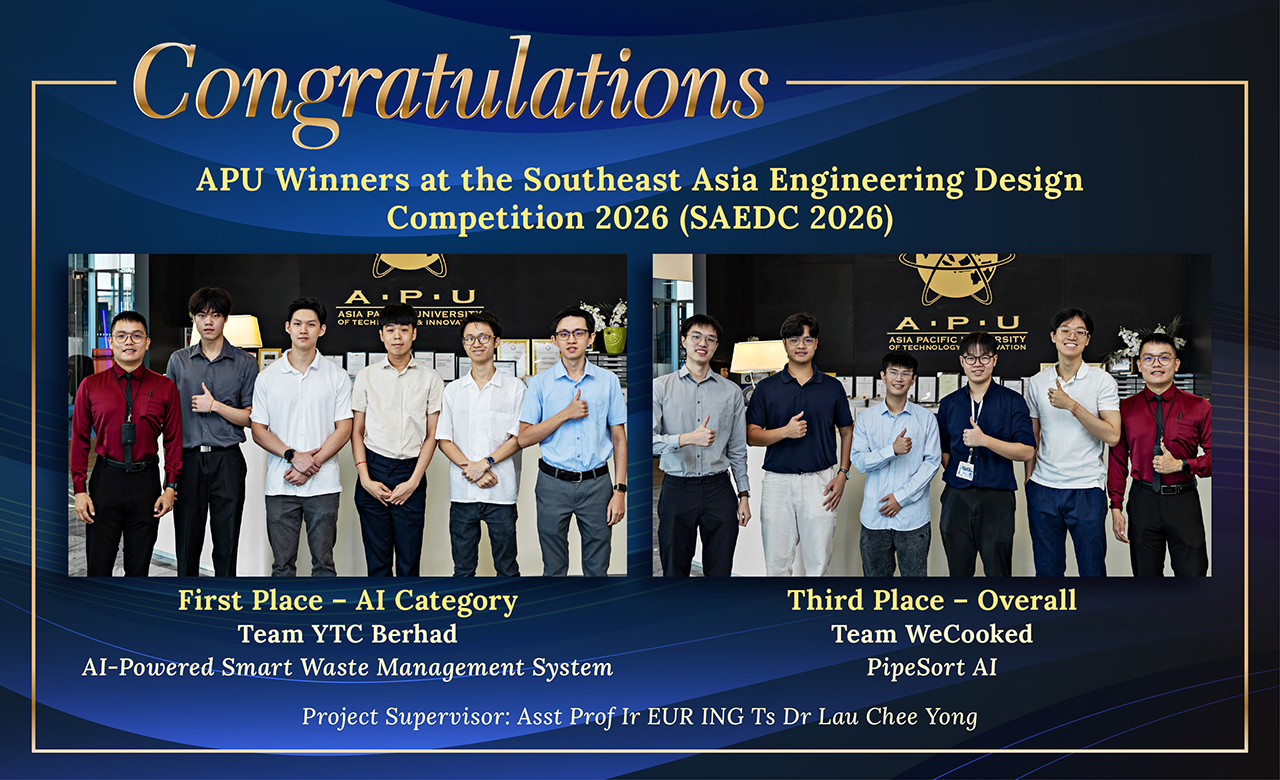
Two School of Engineering teams clinch first and third place at SAEDC 2026, turning AI innovation, sustainability thinking and last-minute engineering challenges into regional success.
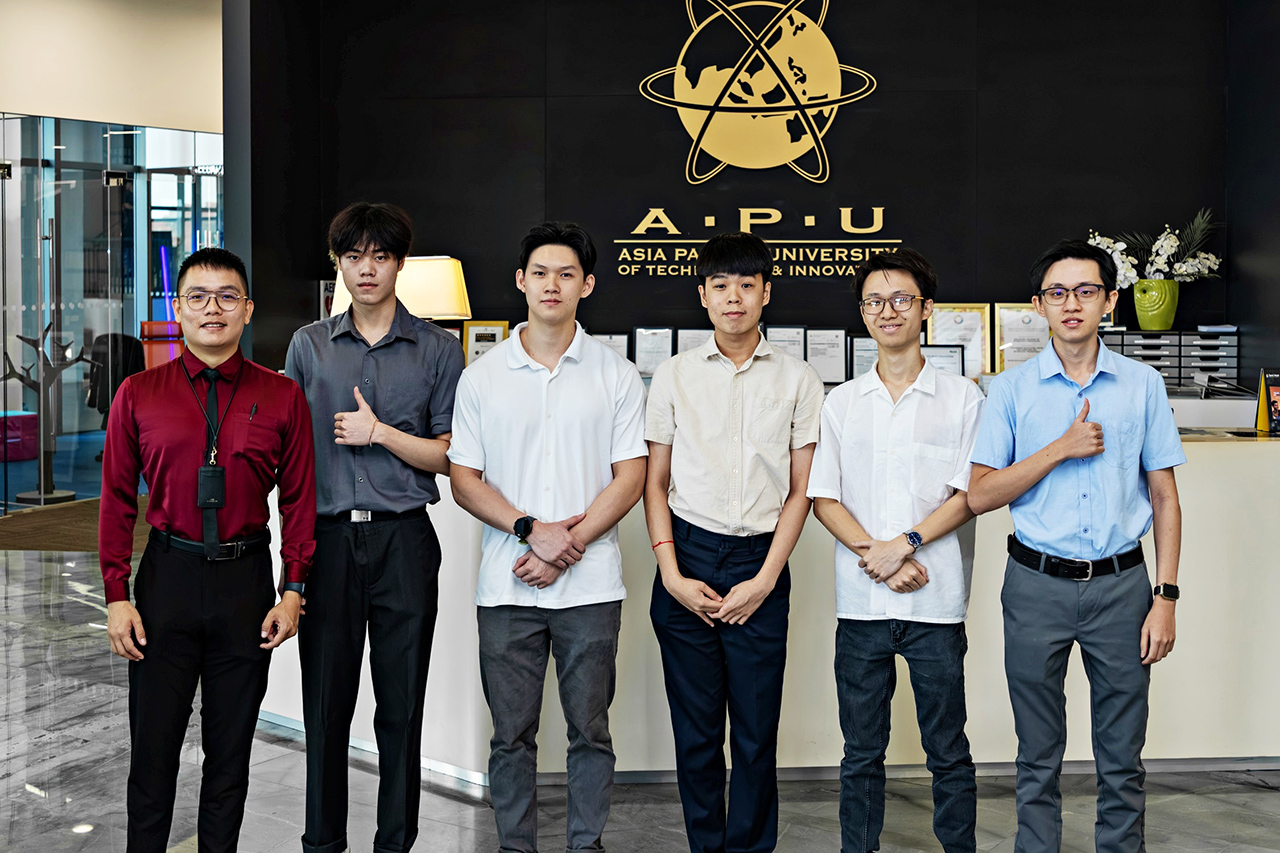
Asia Pacific University of Technology & Innovation (APU) has once again demonstrated the strength of its applied engineering education, with two student teams from the School of Engineering securing first and third place at the Southeast Asia Engineering Design Competition 2026 (SAEDC 2026).
Jointly organised by the Institution of Mechanical Engineers (IMechE) and groups from Republic Polytechnic, APU/APIIT, Universiti Tenaga Nasional, Polytechnic University of the Philippines and the IMechE Brunei Young Members Section, SAEDC challenged students to move beyond theoretical engineering knowledge and develop practical solutions involving artificial intelligence (AI), automation, the Internet of Things (IoT) and sustainability.
Held in hybrid mode, with its closing and award ceremony hosted physically at Republic Polytechnic in Singapore, the competition attracted 117 teams and 476 participants from Singapore, Malaysia, Brunei, Indonesia and the Philippines. The field comprised 52 diploma-category and 65 degree-category entries.
Turning Waste into an Intelligent Sustainability Solution
Representing APU in the AI category, Team YTC Berhad emerged in first place with its AI-Powered Smart Waste Management System.
The team comprised Mechatronics Engineering students Yap Peng Kun, Ng Chuen Hoong, Lloyd Foo Voon Xuan, Sim Zhong Shen and Ong Xiang Bao.
Their project tackled three interconnected problems in waste management: incorrect waste classification at source, inefficient garbage-truck routing and low public participation in recycling.
Using a YOLOv8s computer-vision model, the system detects and classifies glass, metal, plastic and general refuse before automatically opening the appropriate bin lid, reducing the risk of waste being deposited incorrectly.
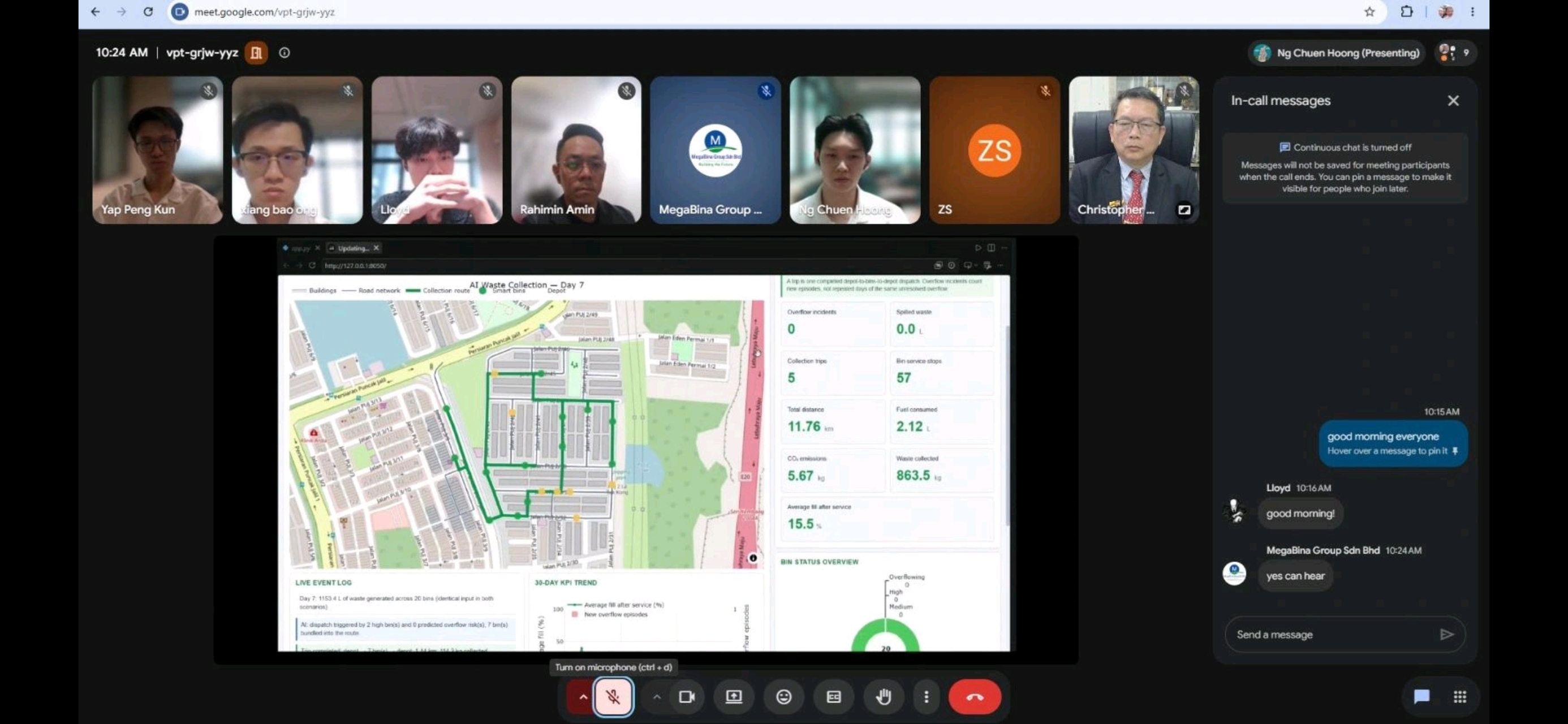
The innovation extends beyond sorting. A 30-day route-optimisation simulation determines more efficient collection routes for garbage trucks, while a companion mobile application, EcoSphere, awards users points for successful recycling to encourage greater public participation.
Simulations comparing optimised and unoptimised collection routes indicated a 37.8% reduction in carbon emissions with route optimisation — a finding highlighted by the judges as one of the project’s standout results.
The AI category was judged by Christopher Ng Kok Keong, a corporate professional and community leader based in Brunei Darussalam, and Rahimin Abdul Amin, ASEAN AI Master Trainer.
When the Hardware Failed, Engineering Took Over
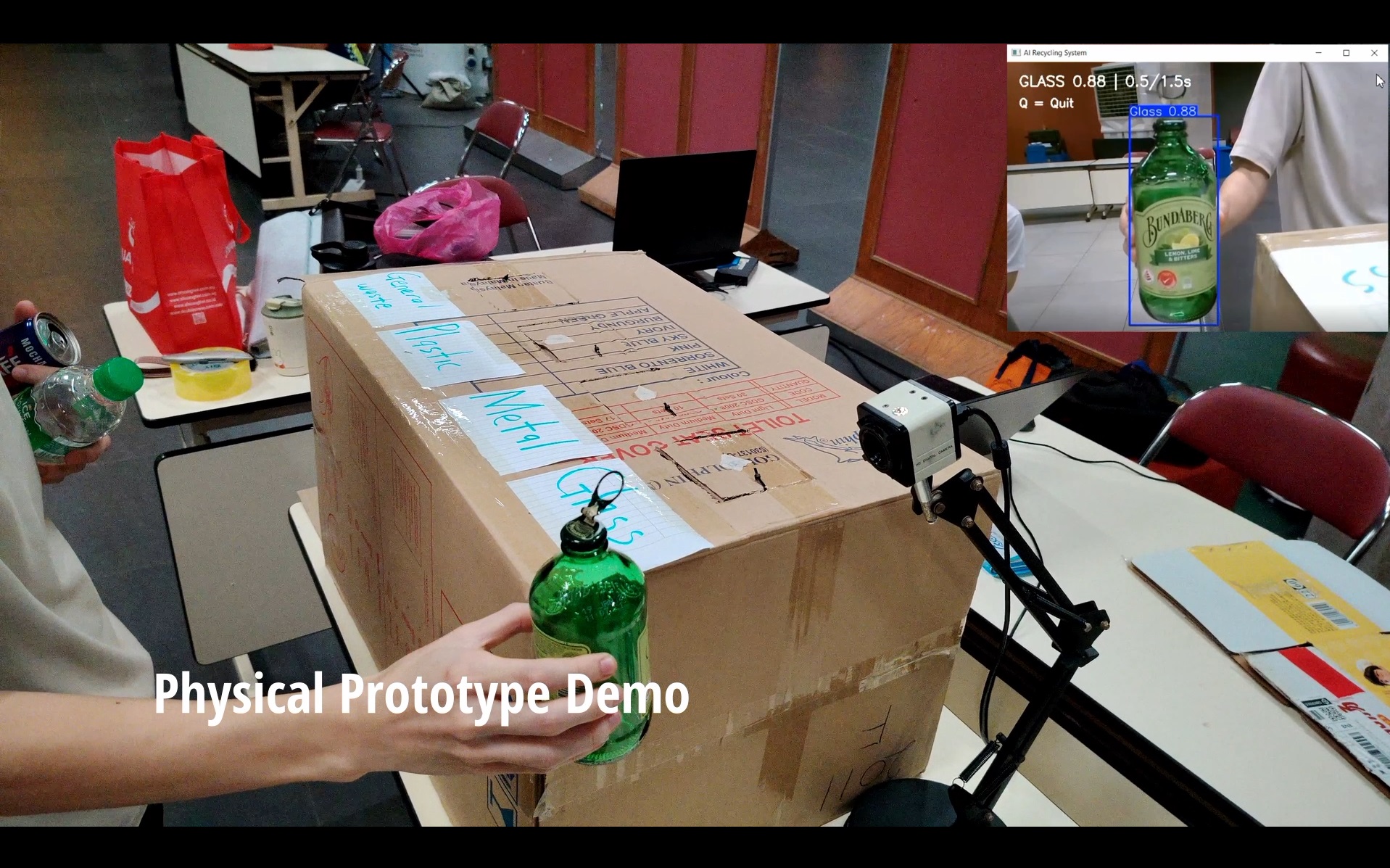
Team YTC Berhad’s journey to the podium was nearly derailed just one day before the competition when the Raspberry Pi 4 at the heart of its original prototype crashed.
Rather than abandon the system, the students worked through the night to redesign the deployment pipeline.
They shifted the YOLOv8s model to a laptop, which streamed classification results over Wi-Fi through HTTP to an ESP32 microcontroller. The ESP32 then controlled the servo motors responsible for opening and closing each waste-category lid.
The last-minute redesign not only kept the prototype alive — it demonstrated the adaptability, system-level thinking and problem-solving skills that engineering competitions are designed to test.
Building More with Less
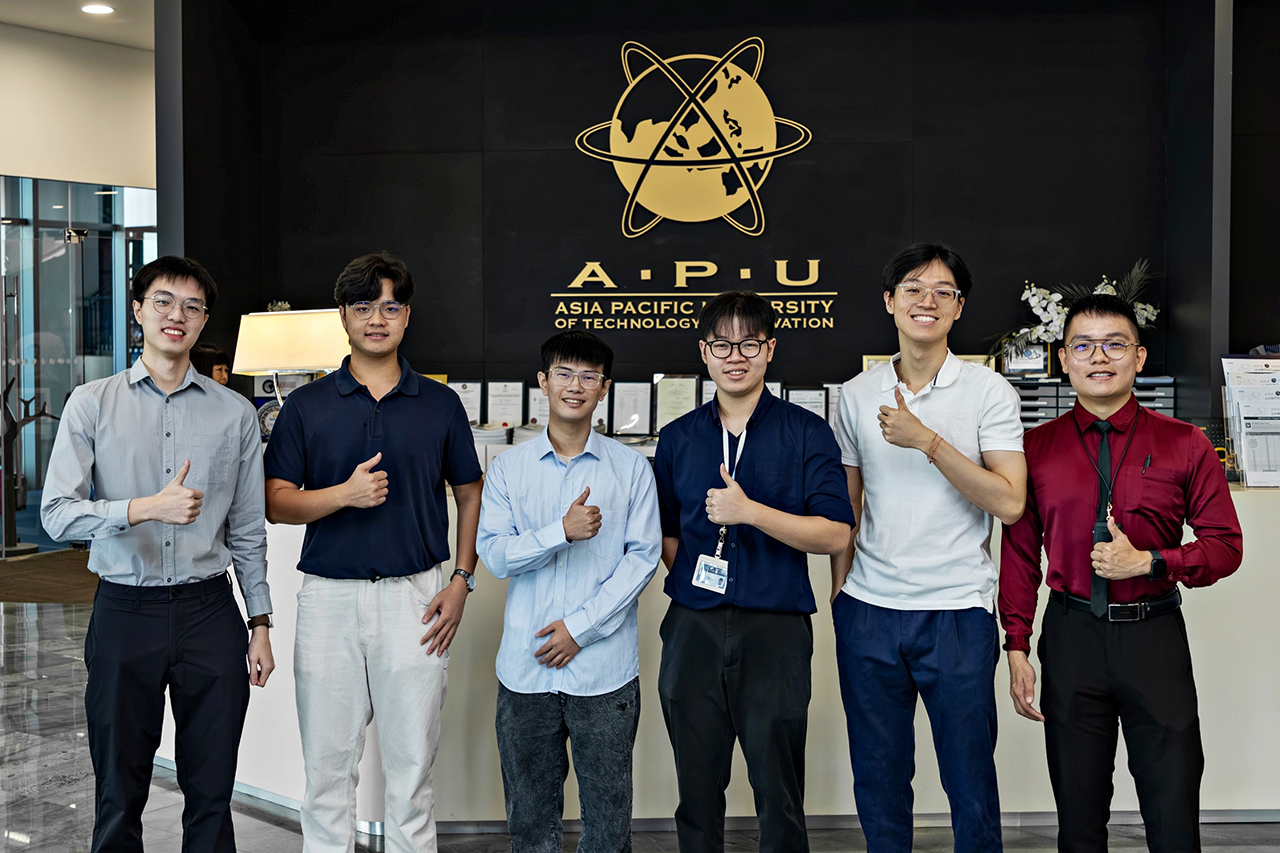
APU’s second finalist, Team WeCooked, secured third place overall with PipeSort AI, an automated waste-sorting system developed around the principle of “Detect, Release, Identify, Sort.”
The team comprised Mechatronics Engineering students Wai Chun Kit, Lee Yi Hong, Choo Zhen Yik and Wong Ke Xiong, together with Electrical and Electronic Engineering student Lim Wei Chen.
Designed under strict budget and power constraints, PipeSort AI makes extensive use of recyclable and freely available materials. Wherever possible, electrical components were selected to operate below 10W.
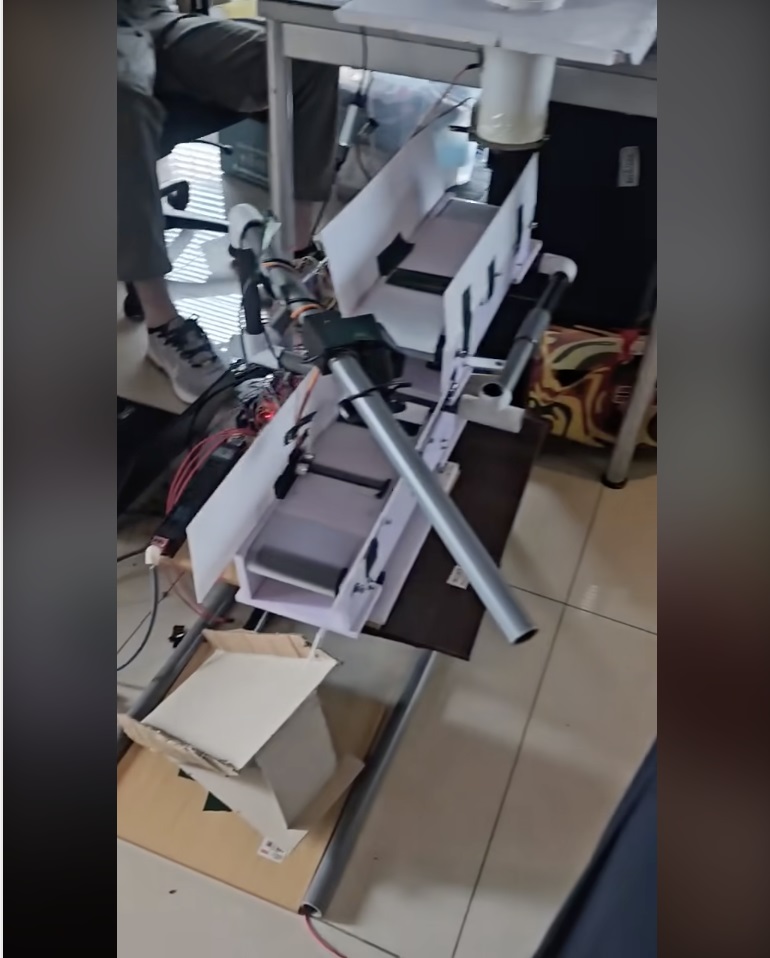
At its core is a YOLO26n model trained to detect and classify different waste types. The model forms part of an integrated pipeline connecting an ultrasonic sensor, conveyor belt, camera and servo-driven sorting mechanism.
Bringing these elements together into a reliable working prototype proved to be one of the team’s biggest engineering challenges — and became a demonstration of how thoughtful design and resource efficiency can be as important as sophisticated technology.
Engineering Grit Behind the Technology
“It is a proud moment for the School of Engineering to see two of our teams take both the top and third-place honours at a competition of this scale, against 117 teams from five countries,” said Prof Ir Dr Siva Kumar Sivanesan, Head of the School of Engineering at APU.
“What stands out about both YTC Berhad and WeCooked is not only the technical sophistication of their AI models, but also their resourcefulness. One team rebuilt its deployment pipeline overnight after a critical hardware failure, while the other created a fully functioning system under extremely tight budget and power constraints. Their achievements show that engineering excellence is ultimately about combining technical knowledge with resilience, creativity and the ability to solve problems when conditions are far from ideal.”
Both teams were supervised by Asst Prof Ir EUR ING Ts Dr Lau Chee Yong, Assistant Professor and Programme Leader of Computer Engineering at APU’s School of Engineering, and Lead of the Visionary AI Studio (VAS).
The two projects reflect VAS’s continued emphasis on applying AI to real-world sustainability challenges, from intelligent waste collection to automated recycling. More importantly, the achievements demonstrate how APU students are learning to transform engineering knowledge into working solutions — even when plans fail, resources are limited, and the pressure is on.
News & Happening
Download e-Brochures
Intake Calendar
Want to know more ?
Let’s Connect