Bringing together three universities across Southeast Asia, the Digital Psychology Forum 2026 highlights APU’s growing strength in digital psychology, advancing interdisciplinary research, international partnerships and student engagement in understanding human behaviour in an AI-driven world.
Image
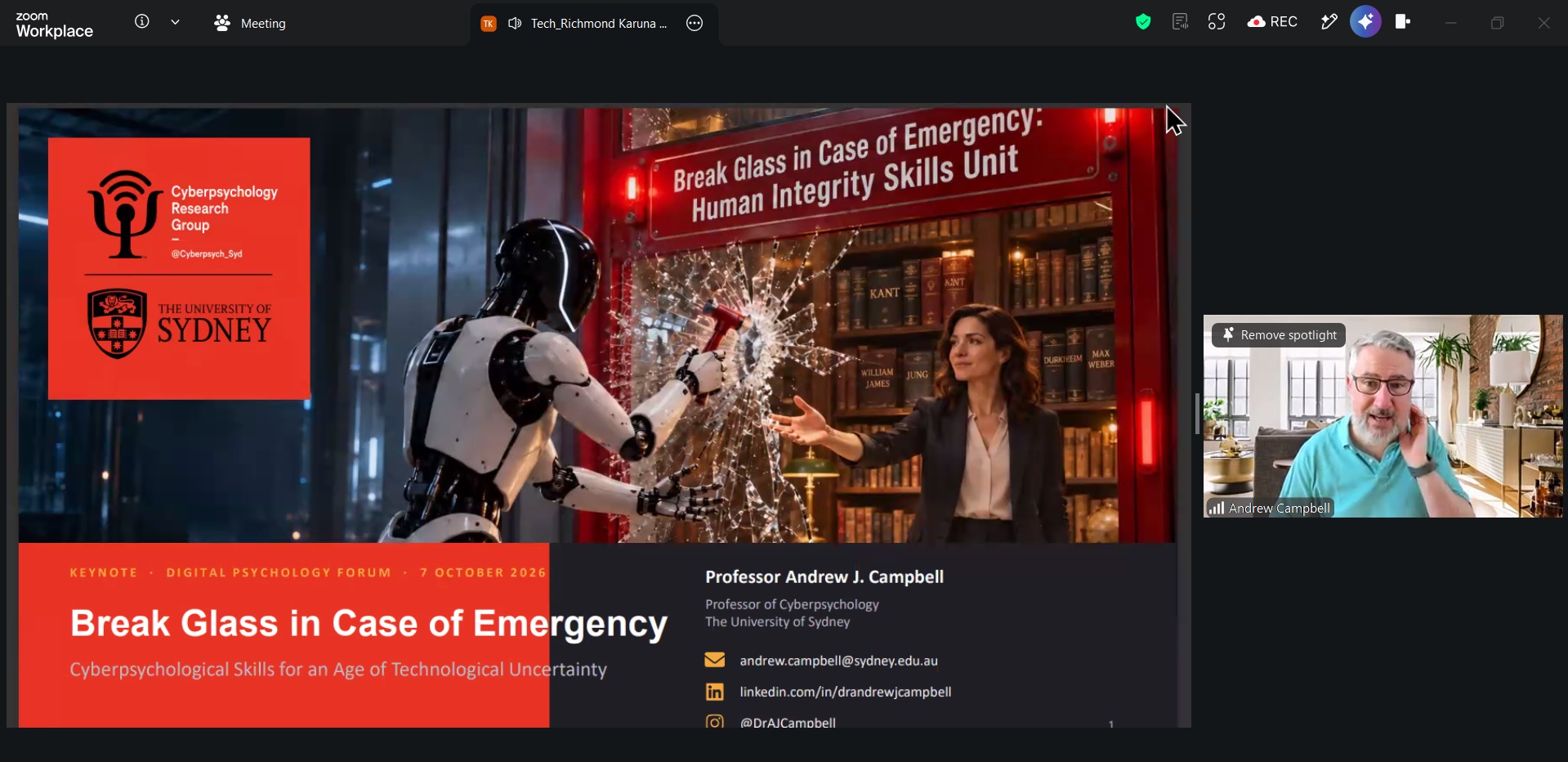
As artificial intelligence (AI) increasingly shapes how people think, communicate and seek emotional support, understanding the human mind behind technological innovation has never been more important.
Recognising this emerging need, Asia Pacific University of Technology & Innovation (APU) continues to strengthen its academic presence in digital psychology through the Digital Psychology Forum 2026: International Joint Research Symposium, held virtually on 7 October 2026.
Co-hosted by APU’s School of Psychology (SoP), BINUS University, Indonesia, and RMIT University Vietnam, the symposium brought together academics, researchers and students from across Southeast Asia to examine the evolving relationship between psychology and technology.
The collaboration highlighted APU’s niche academic strength in digital psychology, connecting psychological research with real-world technological developments and emerging industry needs.
Understanding the Human Dimension of AI
A key highlight was a keynote address by Professor Andrew J. Campbell, from the University of Sydney and an Adjunct Professor at APU, titled “Break Glass in Case of Emergency: Cyberpsychological Skills for an Age of Technological Uncertainty.”
His presentation explored the importance of cyberpsychological skills, resilience and adaptability in helping individuals navigate rapid technological change.
An academic panel discussion further examined the psychological implications of AI integration, addressing issues such as the clinical adoption of AI in healthcare, artificial empathy and the potential psychological effects of AI-mediated emotional support.
These discussions underscored the growing relevance of digital psychology in healthcare, education, technology development and human wellbeing.
APU Academics Driving International Knowledge Exchange
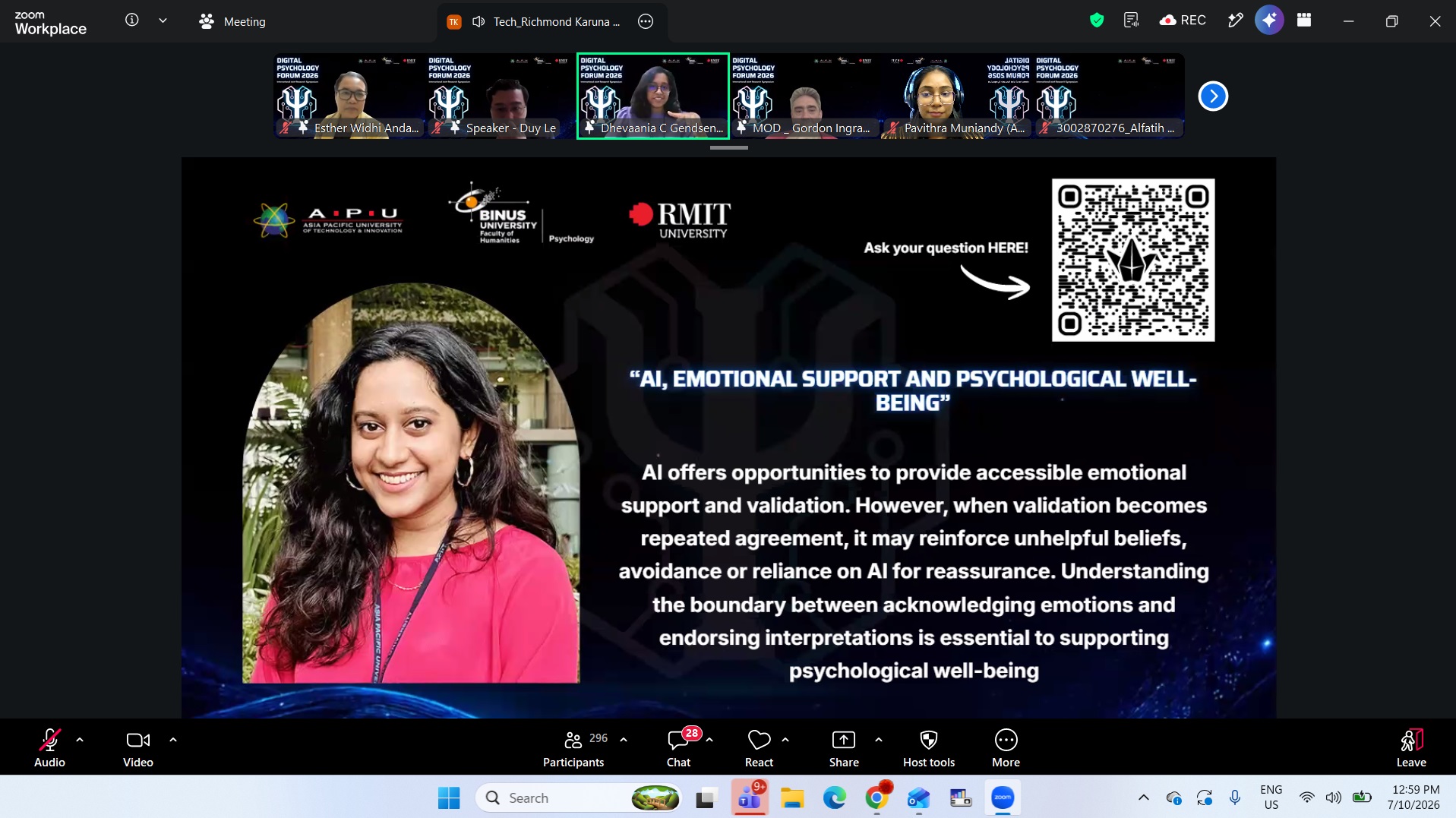
APU’s School of Psychology played an instrumental role in shaping the symposium’s academic direction and delivery.
Ms Vinorra Shaker, Head of School of Psychology and APU Forum Chair, provided academic leadership, while Ms Pavithra Muniandy, APU Organising Lead, coordinated the programme.
Ms Dhevaania C. Gendsen contributed as a panel expert, offering psychological perspectives on AI and human behaviour, while Ms Raihan Munira Moh Sani served as an expert judge, evaluating student research presentations.
Their collective involvement reflected the School’s commitment to research engagement, academic excellence and international collaboration.
Empowering Students Beyond the Classroom

Student participation formed another important dimension of the symposium, with psychology students from all three universities presenting research and receiving valuable feedback from academic experts.
APU students explored contemporary issues surrounding online identity, peer support, compassion fatigue, AI usage and cognitive functions, demonstrating how psychological research can inform our understanding of technology-mediated experiences.
Two APU Bachelor of Science (Honours) in Psychology students, Chua Khai Tim and Monique Koe, also served as student emcees, engaging with speakers and participants throughout the international programme.
“At APU, we believe psychology education must go beyond textbooks and classrooms. By giving students the opportunity to present research, engage with international experts and take on leadership roles, we are nurturing confident, critical thinkers who can apply psychological knowledge to the challenges of an increasingly digital society,” said Ms Vinorra.
Building a Human-Centred Digital Future
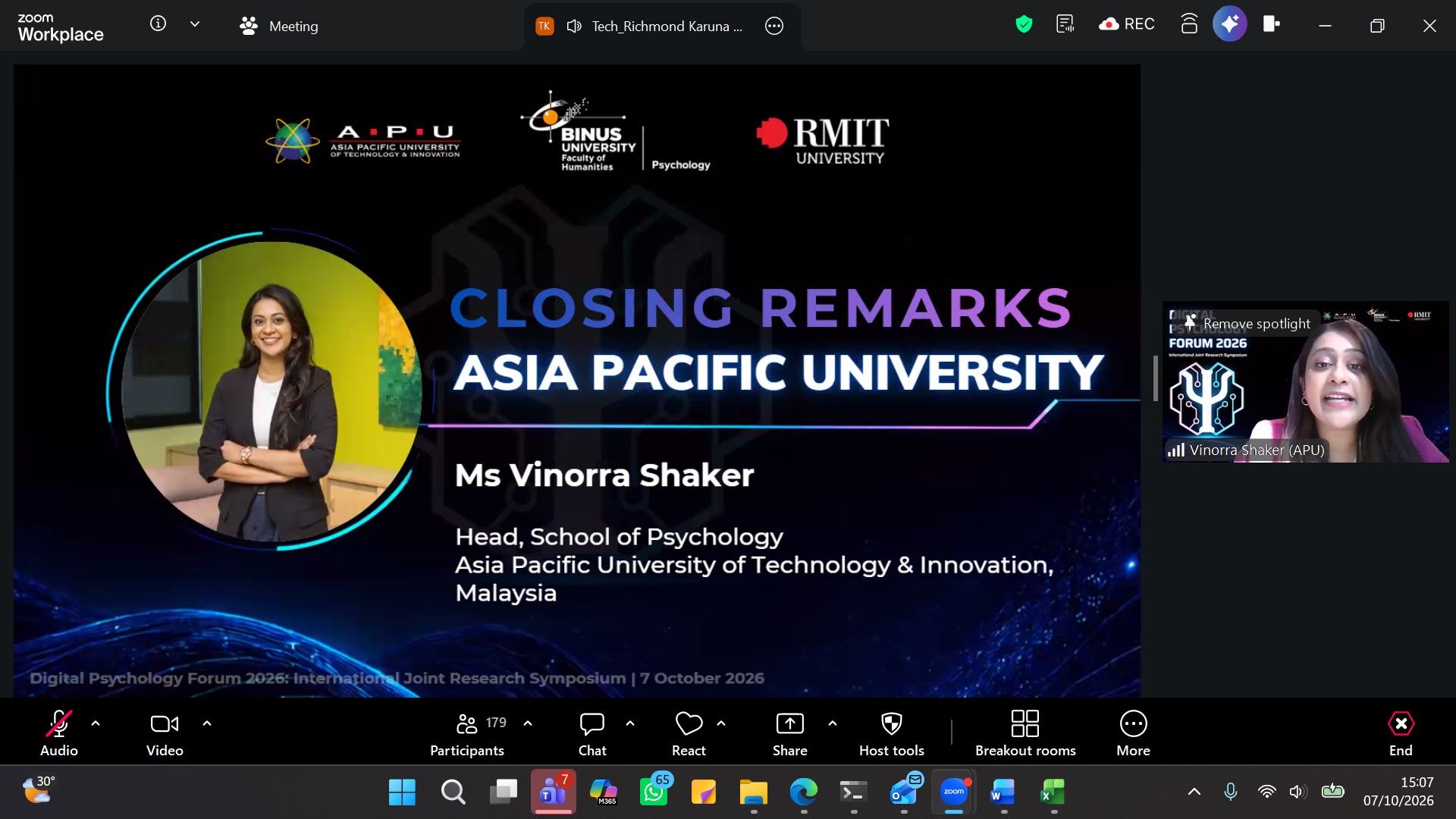
The symposium further strengthened academic ties between Malaysia, Indonesia and Vietnam, creating opportunities for knowledge exchange, research networking and future interdisciplinary collaboration.
Reflecting on the significance of the partnership, Ms Vinorra emphasised:
“Innovation can transform the way we live, but without understanding human behaviour, even the most advanced technology risks losing its purpose. As psychologists and educators, our responsibility is to ensure that technological progress remains human-centred, ethically responsible and beneficial to society.”
For APU, the symposium reaffirmed the School of Psychology’s commitment to developing future-ready graduates and advancing research that bridges psychology, emerging technologies and human wellbeing.
As digital transformation gathers pace, APU continues to champion a fundamental principle: meaningful technological progress begins with understanding people.
News & Happening
Download e-Brochures
Intake Calendar
Want to know more ?
Let’s Connect